



< Back to the Photography Museum Lenses: Canon RF Mount
Canon RF 16mm ƒ/2.8 STM
An ultra-wide pancake-style lens for full-frame RF-mount cameras, introduced in 2020. My only non-IS (image stabilized) RF lens.
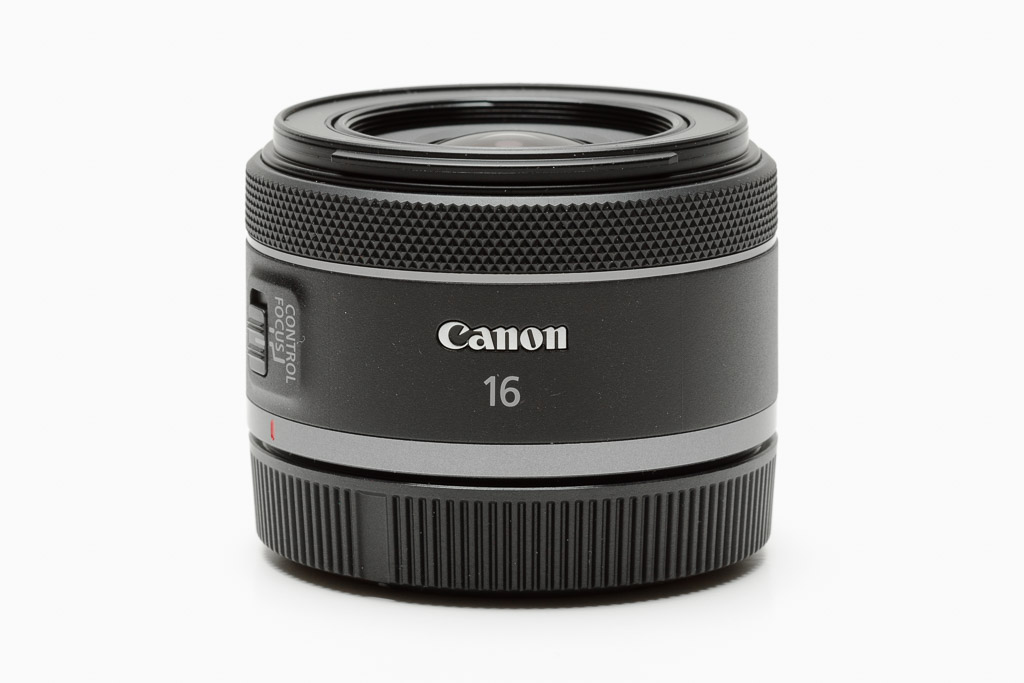
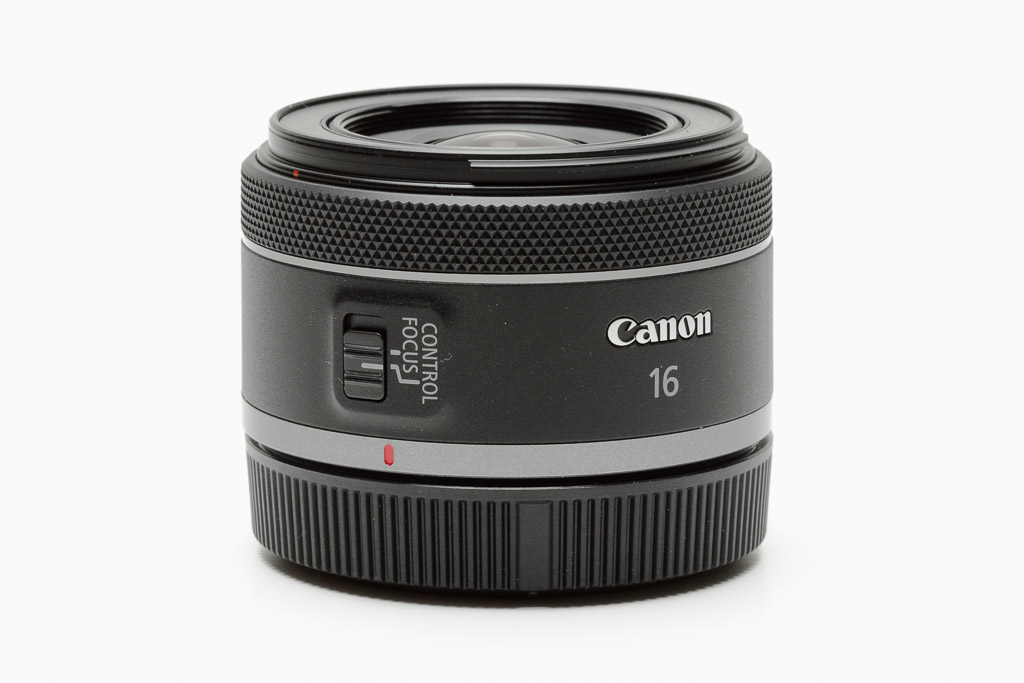
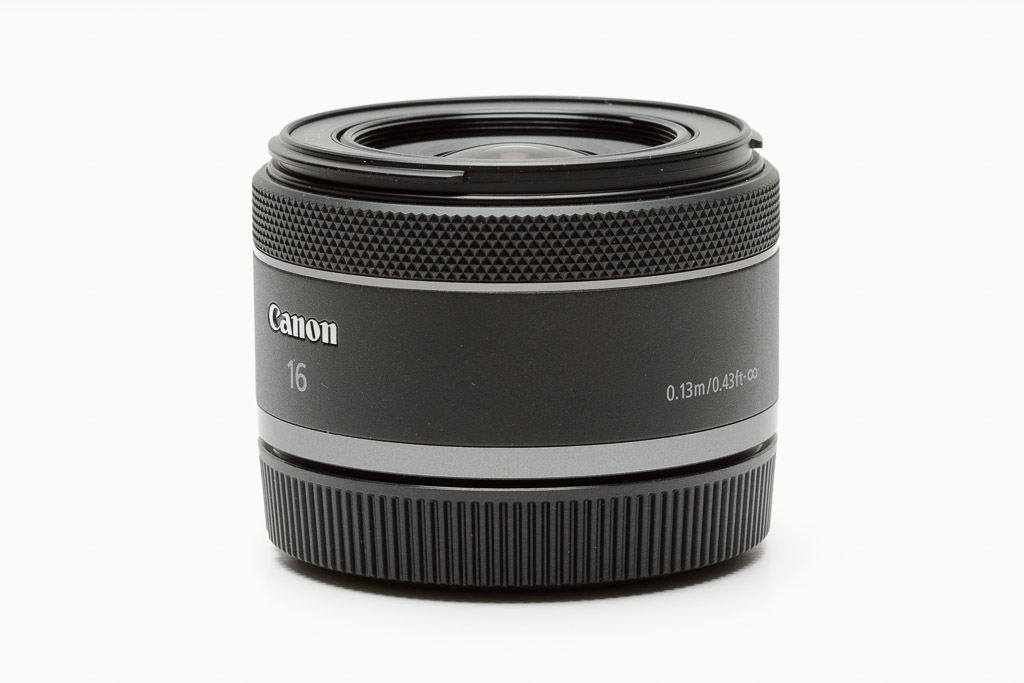
The RF 16mm follows the design language of the other non-L non-macro RF primes (like the RF 50mm ƒ/1.8 STM). It has a single focus/control ring near the front of the lens and a single switch to toggle the ring’s function between Focus and Control.
Switching to manual focus mode requires diving into the camera’s menus or assigning a camera button as an auto-focus/manual-focus toggle. I use back-button-focus, so I essentially have full-time manual focus with auto-focus at the touch of a button.
At 69.2 mm long and 40.2 mm wide and weighing approximately 165 g, the RF 16mm is one of the most compact first-party RF lenses (though technically, it is 0.3 mm longer and 5 g heavier than the RF 50mm ƒ/1.8).
The lens relies heavily on in-camera distortion- and vignette-correction. In theory this sounds less than ideal, but given the introductory $299 price tag, I think this a fair compromise. And in reality, the corrections do not negatively impact image quality that much.
I’ve used ultra-wide lenses since the introduction of the original EF 16-35mm ƒ/2.8 USM. However, it is one thing to shoot full-frame with 16mm simply being the widest focal length on a zoom lens, and it is another thing to be locked into 16mm with a prime lens. Zooming with your feet often means creating a completely different photograph.
To me, this focal length (in a prime) is a fairly specialized piece of kit. The images it creates are interesting, but it’s not something I could shoot with everyday. That said, I bought it for two reasons: 1) it was inexpensive; and 2) it is compact and I wouldn’t mind having it in my camera bag most of the time.
Often, even when primarily shooting with the 24-105mm, 70-200mm, or 100-500mm, I will have this lens in my bag on the off chance I want to shoot something ultra-wide. Of course, if I have a preconceived plan for wide-angle landscapes in mind I bring my EF 16-35mm ƒ/4 L IS USM instead.
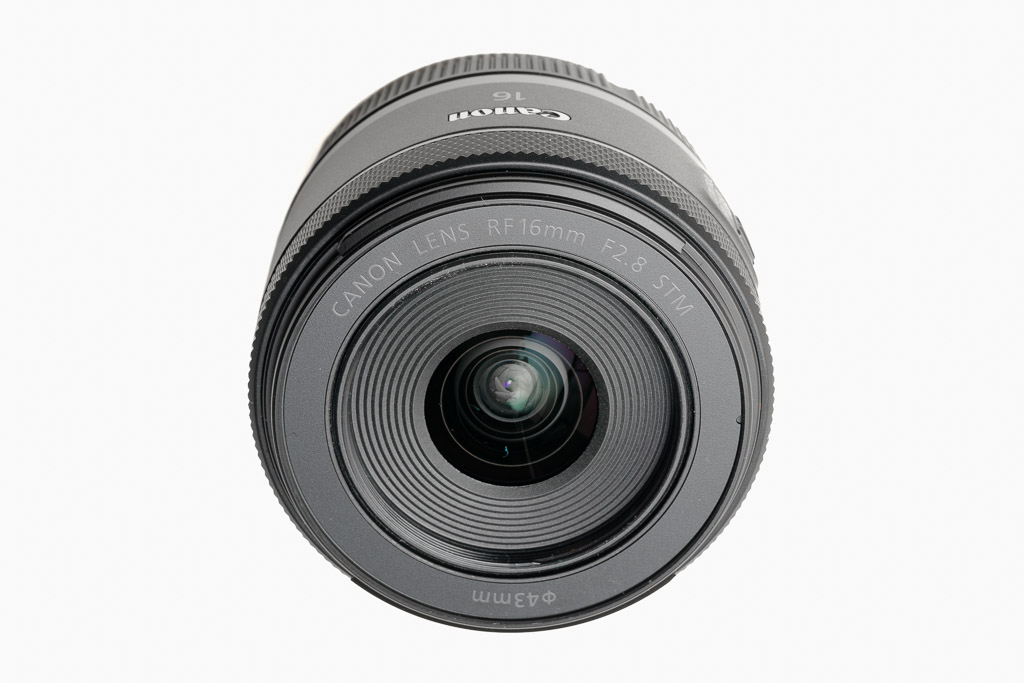
The RF 16mm has a 43mm filter thread and lens cap. I usually have a 43-52mm step-up ring installed so I can swap a 52mm lens cap and filters easily between this lens and my RF 24mm ƒ/1.8 Macro IS STM.
I also usually have the Canon EW-65C lens hood installed to combat flare.
Samples





https://global.canon/en/c-museum/product/rf510.html
 Springer Photo Graphics