

< Back to the Photography Museum Cameras
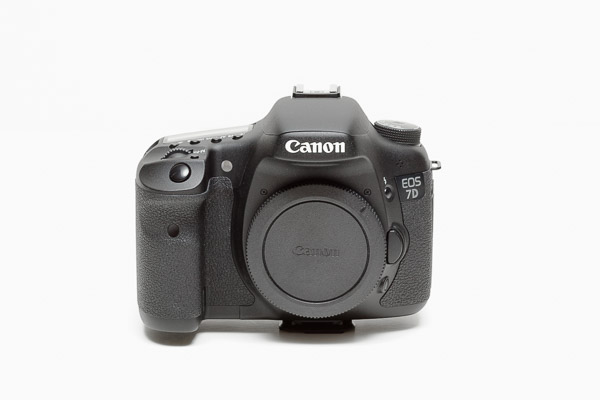
Canon EOS 7D
Released in 2009. I inherited this camera from my brother. He was not himself a hard-core photographer though he worked his entire career in the graphic design and stock imagery industry1.
When I received this camera in 2020, I was well beyond DSLRs, having been using Canon M-series cameras for several generations. But I did shoot with the 7D a bit for fun and found it a delight to use (for a DSLR) with very good image quality (held back only by high ISO performance which sensors of the era lacked).
My most advanced DSLR at that time was a Canon EOS 30D which I then only ever used for nostalgia’s sake.
The 7D was a definitely a step up from the 30D in almost every aspect:
- 18 megapixels vs 8.2 megapixels
- 8 fps vs 5 fps
- Dual DIGIC 4 vs single DIGIC II
- 19 AF-points vs 9 AF-points
- 3-inch vs 2.5-inch LCD screen
In a lot of ways, this camera is from the apogee era of the DSLR, right at the beginning of the hybrid stills/video revolution. Even as I write this in 2024, the successor EOS 7D Mark II (2014) would still be a viable camera body for 80% of use cases.
I tend to use the 7D with my longer, heavier EF lenses, like my venerable EF 80-200mm ƒ/2.8 L and my Tamron SP 150-600mm.
The 7D records Live View HD video at up to 30 fps (the only DSLR I own that can record video). I don’t think I have ever actually used it to shoot video though, so can’t comment on the quality or shooting experience.
In 2020, the demise of the EOS M-series was seemingly assured. I also had a desire for a higher-end hybrid full-frame camera, which I felt would eventually come in the form of an EOS R-series body. My short time with the 7D convinced me that a larger enthusiast-oriented EOS body was what I should be waiting for. When the EOS R6 Mark II was eventually released I didn’t hesitate to make that my upgrade.
https://global.canon/en/c-museum/product/dslr802.html





| Replaces | Replaced by |
| Canon EOS 30D | Canon EOS R6 Mark II |
Footnotes
- My brother, three years my senior, started working at Image Club Graphics while still in high school, continued there when they were sold to Aldus and merged with Adobe; helped start EyeWire which was bought by Getty Images; and co-founded Veer which was purchased by Corbis. I meanwhile, went to art school, worked in the graphic arts industry, did some commercial photography, and eventually became the first full-time employee of Veer-competitor iStockPhoto. I remained with iStockPhoto when they were purchased by Getty Images, rising eventually to CTO and then retiring as VP of RD. Needless to say, though my brother and I shared a lot of interests, while working most of our careers as competitors we didn’t talk a lot about work. ↩︎
 Springer Photo Graphics