While multi-purpose office paper is usually packaged by the ream (500 sheets), high quality digital art inkjet photographic paper sheets are most commonly sold in packs of 25.
“I bought 2 quires of Moab Entrada Bright 190gsm 13″ x 19″ cotton rag paper.”
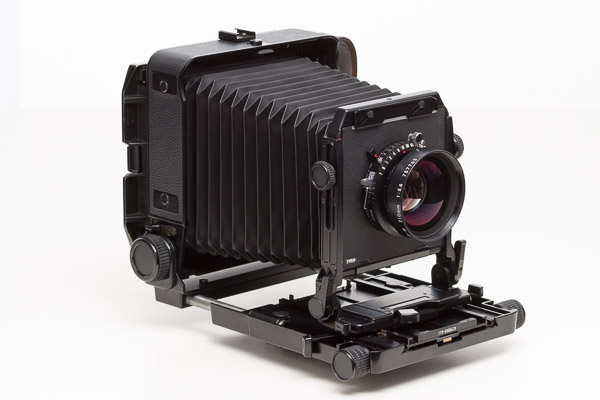
In university, while seriously starting to pursue photography, I was enamoured with owning either a medium format or large format camera system. My preference was for a Hasselblad 501CM, but that was out of my price range. Somehow I discovered Toyo-View, a small Japanese manufacturer of large format cameras. Their Toyo-Field 45 AX folding field-camera was relatively inexpensive. The idea of shooting huge 4″ x 5″ transparencies was very appealing, as was the myriad of camera movements and perspective controls that a large format camera offers. The field camera body has less extreme movement than a studio rail camera, but is also a much more compact outfit. I needed compactness as I planned to shoot not only studio work but large format landscapes as well.
Around 2000, I got the Toyo-Field 45 AX with a Nikkor W 210 f/5.6 “normal” lens and later picked up the amazing Nikkor SW 90 f/4.5 super-wide angle (equivalent to 55mm and 24mm in 135 film format respectively).
I have eight double-sided 4×5 sheet film-holders, but it is unlikely that I could actually make 16 exposures in a single day of landscape shooting. I also have a Horseman 6x9cm 120-format roll film holder too, for those times when I do need to expose a lot of film (e.g., exposure bracketing, in the studio, etc.) and don’t mind a bit of crop factor.
I always intended to buy a large-format digital back to use with this outfit, but large-format backs never became affordable. Instead smaller sensors increased in resolution and smaller lenses improved in resolving power. In 2016 I purchased a Fotodiox 4×5 sliding back adaptor which allows me to make stitched multi-row panoramas using my EOS bodies as a sensor behind the Toyo-Field 45 AX. The image area is about 6.75×4.5cm with the Fotodiox back.
With this digital setup I cannot focus my Nikkor 90mm at infinity (it makes a nice close-up lens though) and the Nikkor 210mm is a bit long. On the hunt for a moderate wide-angle, I finally mounted my old Schneider Componon 135mm f/5.6 enlarging lens, which has incredible resolving power, on a recessed Toyo lens-board. The resulting 180 megapixel images are incredibly detailed.
The process of shooting with the 4×5 camera, adjusting the mechanical movements, and composing under the dark cloth on the ground glass focusing screen, is a truly unique experience.
When I was still shooting positive transparency film in the Toyo-Field 45 AX, but had shut down my darkroom, I purchased an Epson Perfection 4990 Photo flatbed scanner (released 2005). This scanner came with a transparency adaptor and holders for 35mm film strips, mounted 35mm slides, 120 film strips, 4×5 sheet film, and 8×10 sheet film. It is a great scanner and I still regularly use it with Silverfast Ai Studio scanning software. (I recently switched to using my EOS M3 as a copy stand camera for digitizing slides — better resolution and dynamic range than the flatbed scanner).
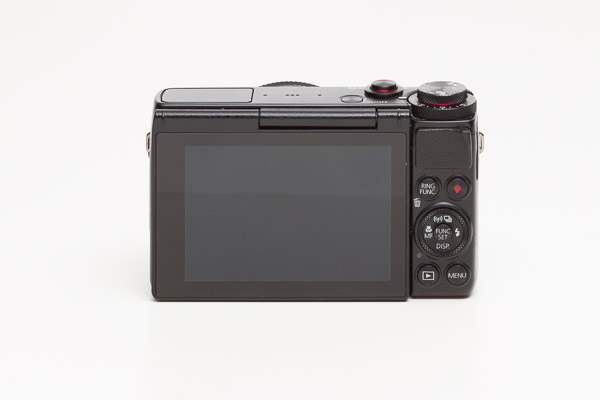
I replaced the PowerShot S110 with a Canon PowerShot G7 X in late 2014. The PowerShot G7 X features a much large 1″ type sensor and at 20.2 megapixels is light years ahead of the PowerShot S110, but with almost no physical size penalty. It also has a tilting touchscreen and Wifi, a fast (ƒ/1.8-2.8) 24-100mm equivalent lens, and maintains the control ring introduced in the S90.
There is really only one reason I bought the PowerShot G7 X in the first place — my daughter. About to have a baby, I figured I could justify a hi-quality compact camera purchase for capturing those once in a lifetime moments that were about to happen. I haven’t been disappointed. The PowerShot G7 X has also been a great travel and back-country camera.
This is still my go-to camera when compactness is required. At the end of 2016 I was sorely tempted to upgrade to the PowerShot G7 X Mark II, but I told myself I would only buy the Mark II or the Canon EOS M5, but not both. I got the EOS M5.
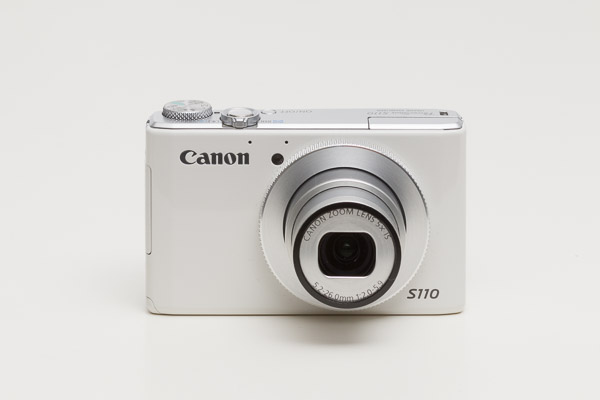
In 2012 I replaced the PowerShot S90 with a fantastic upgrade — the Canon PowerShot S110. The S110 features a 12.1 megapixel sensor, DIGIC 5 processor, touchscreen, and Wifi — all features I put to good use on its inaugural trip, two weeks in India.
I bought the white bodied version for a change of pace. It is a very fashionable looking camera, but I kind of regret the white choice for one reason. The white body tends to show up as a reflection more prominently when shooting through glass, which I often do while travelling (shooting from taxis, trains, airplanes, etc.)
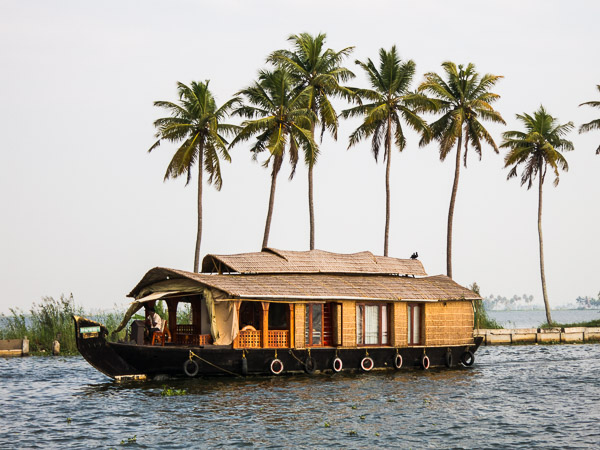
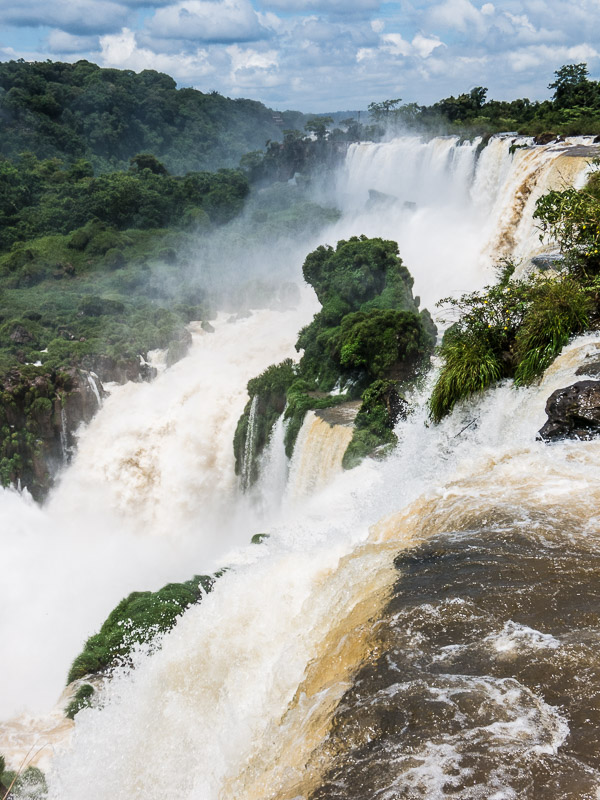
Bird of Paradise, Kerala, IndiaHouseboat, Kerala, IndiaIguazú Falls, Misiones, ArgentinaGlacial Iceberg, Great Glacier Provincial Park, British Columbia
Released in 2009, I got the rugged and waterproof Canon PowerShot D10 to use primarily on my canoeing adventures. It is a rather bulky and odd looking compact camera, but it has worked well.
Many times I looked at upgrading to the D20 or D30, but couldn’t justify the expense for very little gain. The compact camera market (with the exception of the the high-end) has basically disappeared and manufactures are no longer innovating in this space. I’ve considered rugged/waterproof models from other manufacturers, but find the JPEG quality to be total mush compared to Canon.
I’d love the ability to shoot RAW in a waterproof camera, but this does not seem like a feature manufacturers are willing to add.
I basically replaced the PowerShot D10 for casual rugged/waterproof use with my iPhone 6S in a LifeProof FRĒ case. As my later iPhones were given official ingress protection (IP) ratings (IP67 for the iPhone 8 Plus and IP68 for the iPhone 12 Pro Max) I started using them as water-resistant cameras. I don’t dive with them, and I usually keep them in a waterproof sac when stored around water (e.g., kayaking/canoeing/SUPing), but I don’t worry too much about rain or splashes.
Most recently, I have considered replacing the D10 with an Olympus/OM Systems TG-7 on several occasions but haven’t taken the plunge.
When my daughter needed a point-and-shoot camera she inherited the D10.
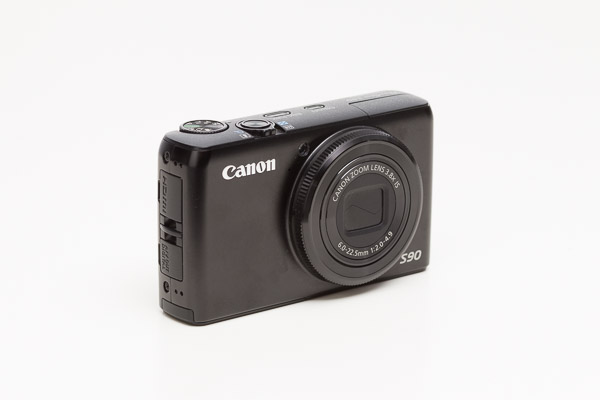
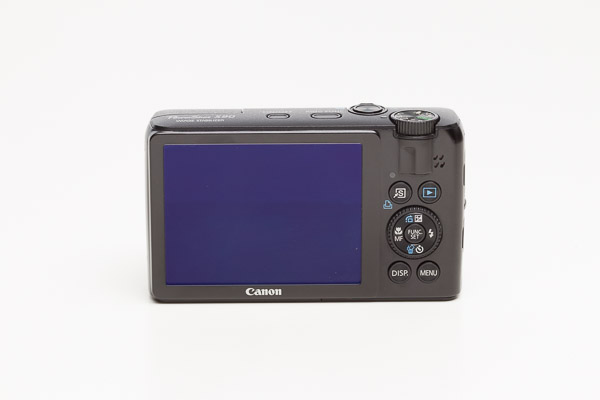
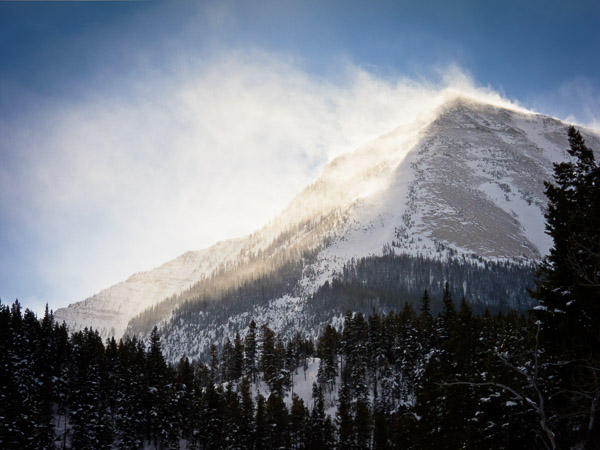
It was not until 2009 that Canon released the successor to the PowerShot S80. The PowerShot S90 featured a much slimmer design than the PowerShot S80, but, as the Canon Museum states, was a “conceptual continuation” of its predecessor, featuring a wide zoom lens and convenient manual controls. It also introduced a feature for which I was overjoyed: RAW files.
A unique addition on the PowerShot S90 was the control ring which encircles the lens barrel. This ring can have its function assigned in software and its use varies by camera mode. The control ring continues in a new form on the Canon EOS M5 as a multifunction dial and selection button combination.
I never had a compact point-shoot film camera for casual use. I always wanted full manual control, and if I needed a really compact camera (say for backpacking) I used the Rollei 35 B I inherited from my dad.
In the digital era my dad had a whole string of Canon Digital ELPH cameras. Though very compact I could never bring myself to buy one myself. The larger Canon PowerShot G-series cameras of the time on the other hand seemed like the worst of both worlds — smaller than a DSLR, but still not pocketable and without the ability to change lenses.
In 2005 I discovered Canon’s PowerShot Sxx series of advanced compact cameras. The series has always feature cameras slightly larger than the tiny compacts, but with better quality wide angle zoom lenses, and, of prime importance to me, full manual control.
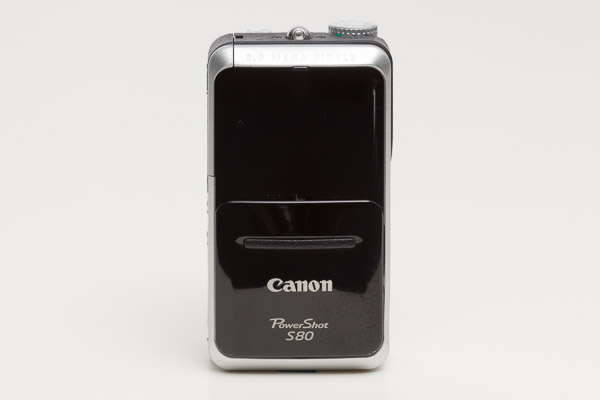
I purchased the PowerShot S80 (released in 2005) as a compact travel and nature photography camera. It joined me on a lot of adventures and captured a lot of shots rivalling what others were creating with DSLRs. The one drawback of the PowerShot S80 was the lack of RAW files.
The first digital camera I used was the Apple QuickTake 100 that we had in the graphics department of my high school. The first real modern digital camera that I used was my dad’s Nikon Coolpix 950 (possible the 990). This was an innovative camera with a unique swivel body/lens design. Other than horrible chromatic aberration, the image quality of this camera was quite good at the time. Good enough that, in combination with a Nikon Speedlight SB-28DX on a flash bracket, I was able to use it for some of my first commercial digital photography contracts. (The build of Nikon’s Speedlight flashes of the time was superior to Canon’s Speedlites — I quite enjoyed the Nikon kit.)
It was obvious that digital photography was about to eclipse film, so in 2004 I acquired my dad’s not very old Canon EOS 10D DSLR for about $1000 to use with my Canon EF lenses (my dad upgraded to the Canon EOS 20D).
While writing the first edition of this article I mentioned the missing Nikon Coolpix 950/990 to my sister. We used to live together and somehow she ended up with the Nikon when she moved out. She had taken a box of old cameras to the thrift store just a couple of weeks prior. I visited the store, but among the several digital compacts and Nikon DSLRs I did not find the Coolpix 950/990. All I have left is the charger.
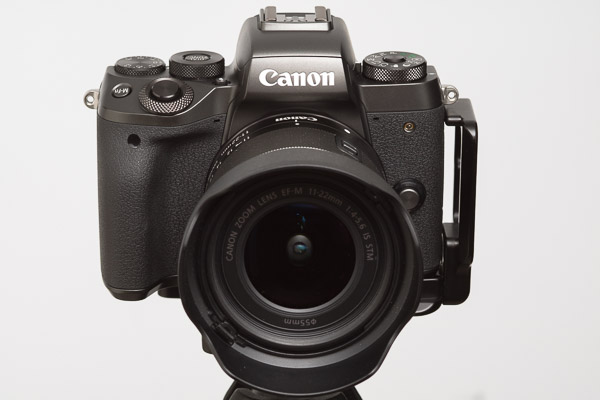
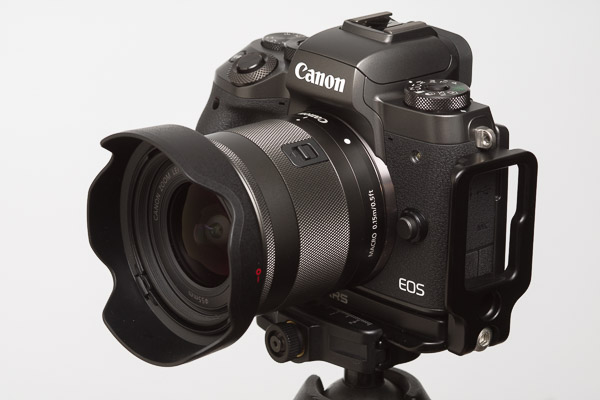
In late 2106, Canon released the Canon EOS M5 addressing a long-standing feature request in the M-series — a built-in EVF. The EOS M5 also adds dual-pixel phase-detection auto-focus (DPAF) which considerably improves AF speed, particularly for adapted EF-mount lenses.
Overall the EOS M5 body has a more DSLR-like feel than it’s predecessors, with a larger body, more pronounced grip, additional control dials, and a more customizable physical interface. And yet, the body retains the compactness and portability that is the hallmark off the line.
Along with the EOS M5 body I added the Canon EF-M 18-150 f/3.5-6.3 IS STM lens (released 2016) to my suite of EF-M lenses. I also added a Tamron SP AF 150-600mm f/5.0-6.3 Di VC USD G2 lens to my collection. This is the first non-Canon professional lens that I have purchased. Tamron (and Sigma) are currently making amazing lenses with performance rivalling the major camera manufacturers and with much lower prices. The Tamron 150-600mm is surprisingly hand-holdable mounted on the EOS M5, though it becomes a bit unbalanced at full 600mm extension (that is more a function of the centre of gravity being so far in front my lens holding hand).
The eye-level viewfinder of the EOS M5 coupled with the long telephoto lens required a larger, more stable tripod, so I acquired the beautifully light Manfrotto MT055CXPRO3 carbon-fibre legs.
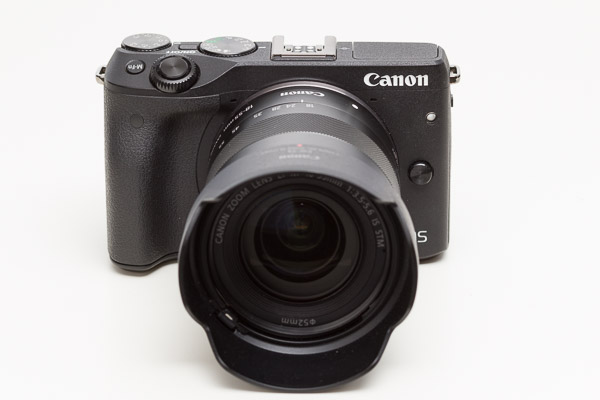
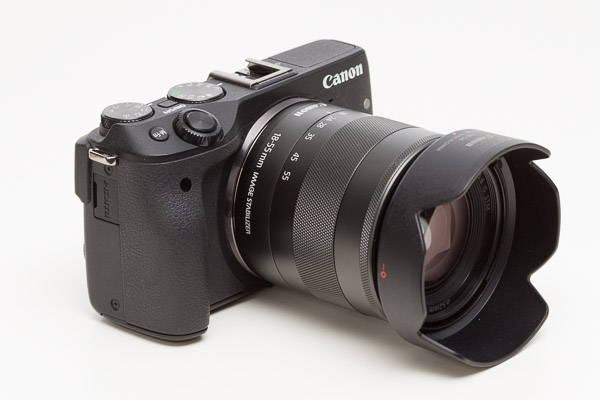
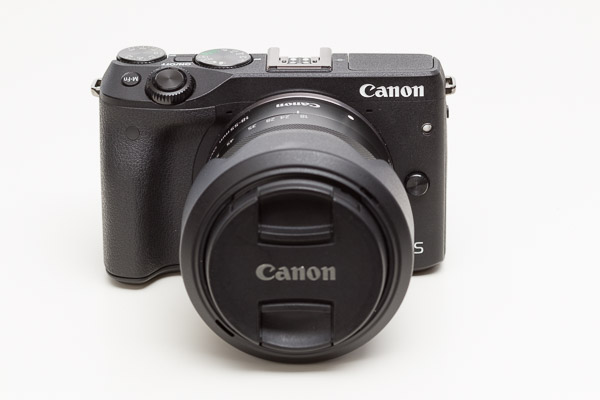
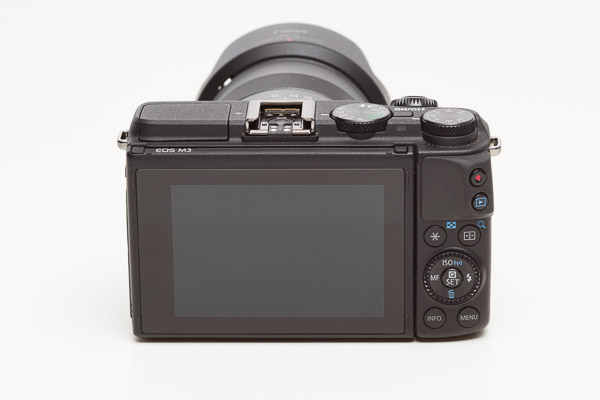
The Canon EOS M3 (released 2015) is my second camera in the M-series. (The EOS M2 was never released in North America and featured modest improvements over the original firmware updated EOS M.)
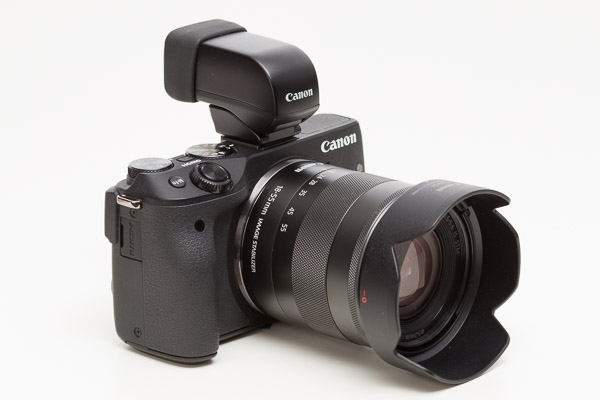
The M3 features a 24 megapixel sensor, dedicated exposure compensation dial, larger grip, an optional hot-shoe mounted EVF, and more DSLR-like handling. The body is larger than the original M, but still compact.
Focusing and overall speed are improved in the M3, though continuous shooting is stilled maxed out at 4.2 frames per second (much worse in Servo AF mode).
I quite enjoy shooting with the M3. Having to attach or remove the EVF is a bit of a pain. However, I really appreciate the tilting function of the EVF, especially when working on a compact tripod, or shooting from low angles.
With the M3 I added the EF-M 55-200mm ƒ/4.5-6.3 IS STM zoom lens (released 2014) to my collection.
In 2015 my family moved to a new house. Desiring to photographically document the interiors of both the old house and the new house, I added two Canon Speedlite 6OOEX-RT flashes and a compact stand set to my collection. The radio transmission (RT) multi-flash setup has many advantages over the old optical transmission system, especially when line of sight is a concern. I paired the new Speedlites with a compact stand and umbrella kit from Photo Republic and on-flash modifiers by Roque Flash.






















 Springer Photo Graphics