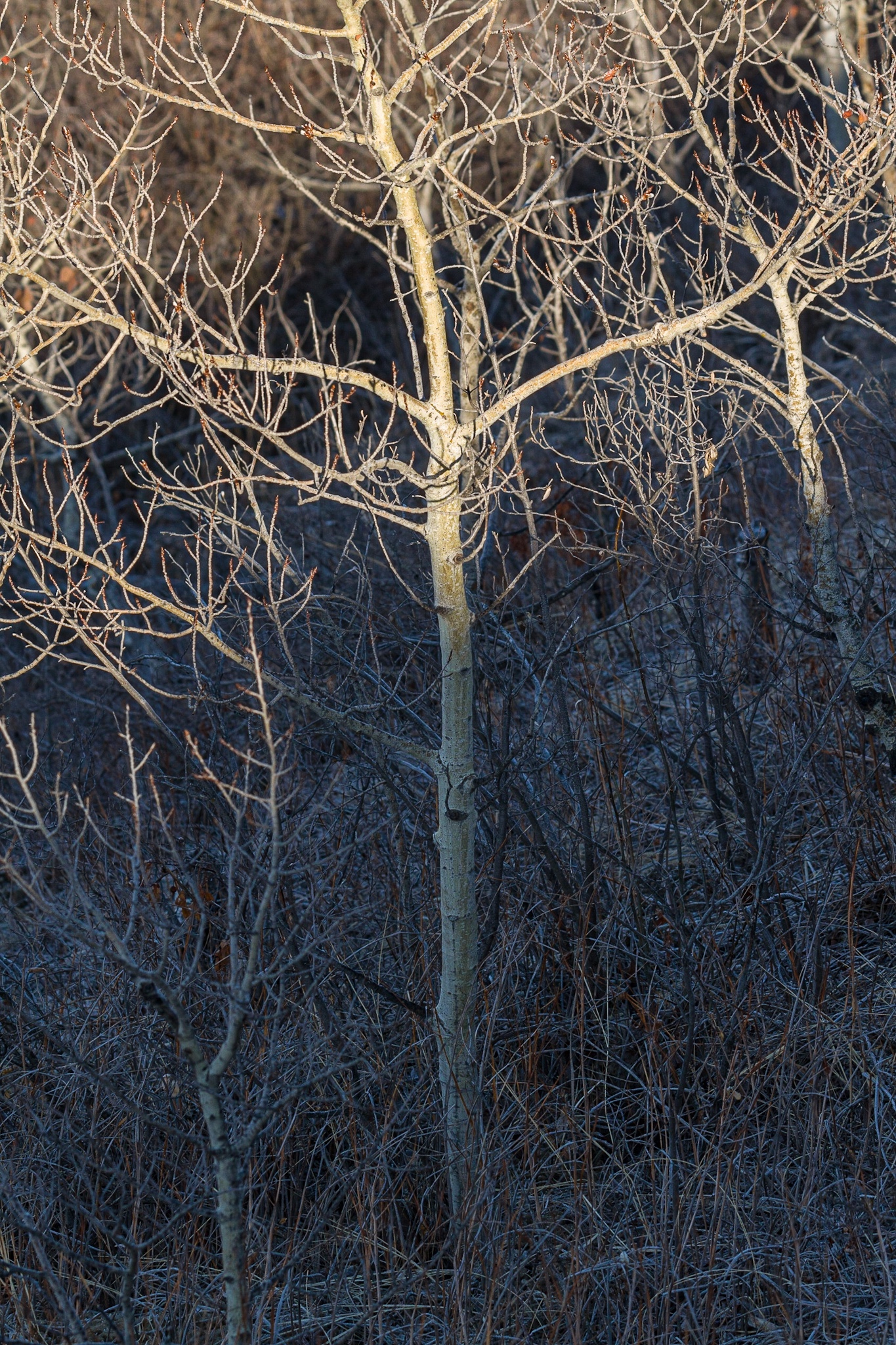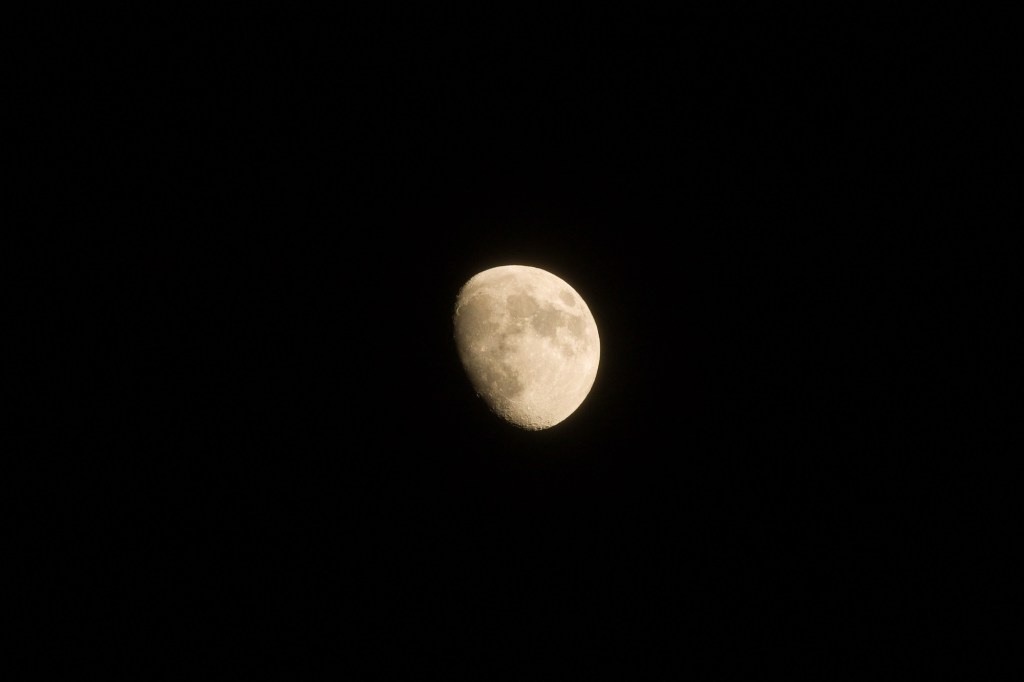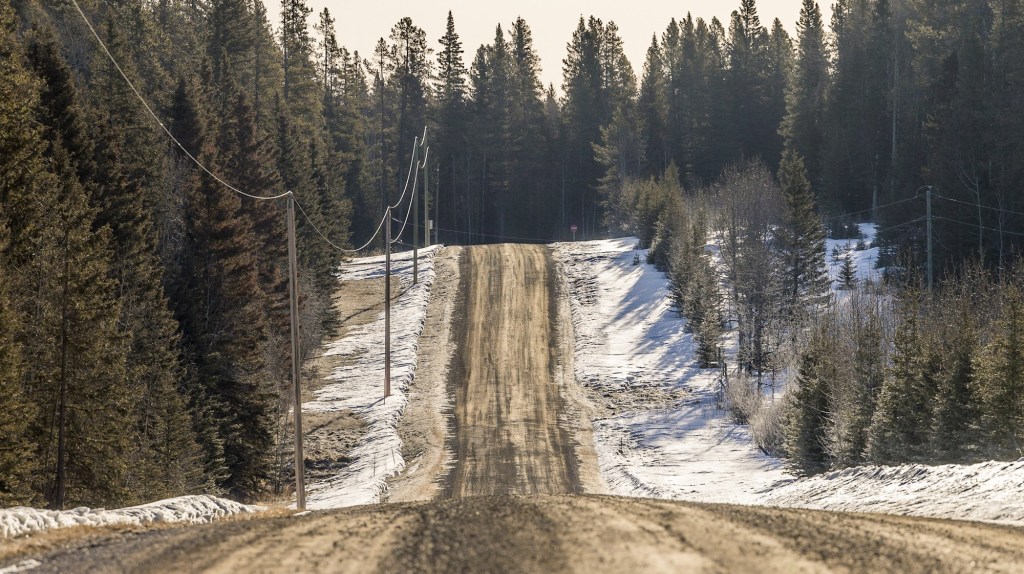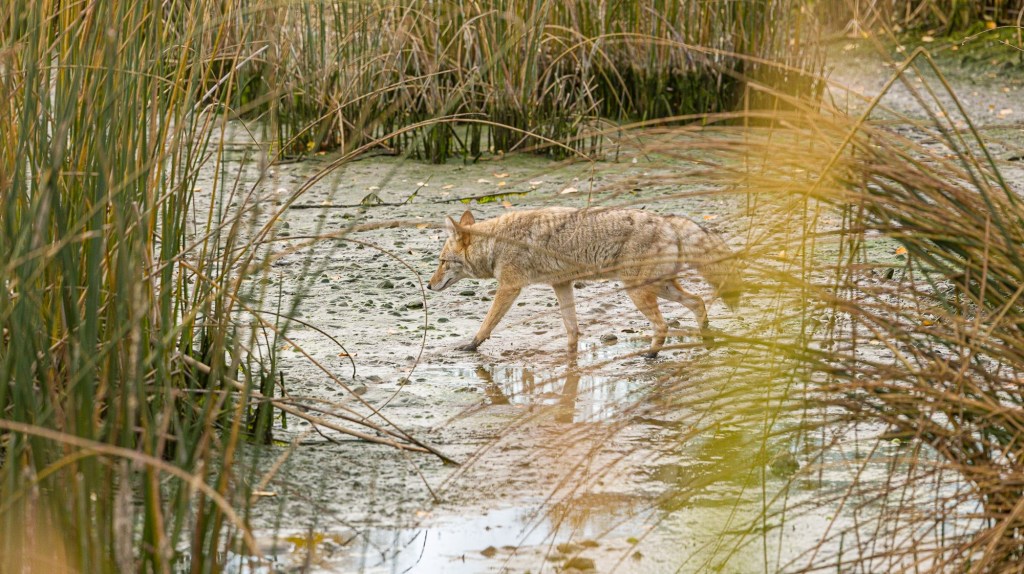
Camera: Canon EOS 7D (Photography Museum)

< Back to the Photography Museum Cameras

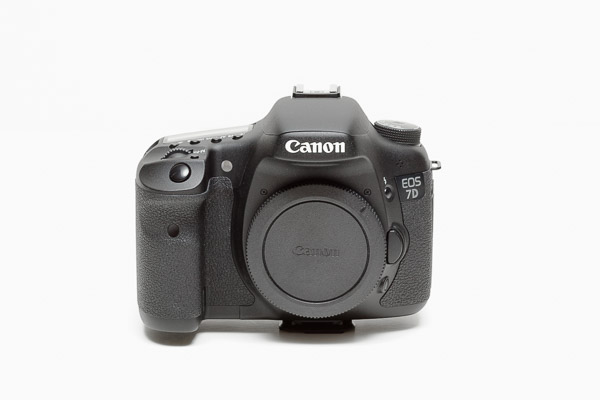
Canon EOS 7D

Released in 2009. I inherited this camera from my brother. He was not himself a hard-core photographer though he worked his entire career in the graphic design and stock imagery industry1.

When I received this camera in 2020, I was well beyond DSLRs, having been using Canon M-series cameras for several generations. But I did shoot with the 7D a bit for fun and found it a delight to use (for a DSLR) with very good image quality (held back only by high ISO performance which sensors of the era lacked).

My most advanced DSLR at that time was a Canon EOS 30D which I then only ever used for nostalgia’s sake.

The 7D was a definitely a step up from the 30D in almost every aspect:

  • 18 megapixels vs 8.2 megapixels
  • 8 fps vs 5 fps
  • Dual DIGIC 4 vs single DIGIC II
  • 19 AF-points vs 9 AF-points
  • 3-inch vs 2.5-inch LCD screen

In a lot of ways, this camera is from the apogee era of the DSLR, right at the beginning of the hybrid stills/video revolution. Even as I write this in 2024, the successor EOS 7D Mark II (2014) would still be a viable camera body for 80% of use cases.

I tend to use the 7D with my longer, heavier EF lenses, like my venerable EF 80-200mm ƒ/2.8 L and my Tamron SP 150-600mm.

The 7D records Live View HD video at up to 30 fps (the only DSLR I own that can record video). I don’t think I have ever actually used it to shoot video though, so can’t comment on the quality or shooting experience.

In 2020, the demise of the EOS M-series was seemingly assured. I also had a desire for a higher-end hybrid full-frame camera, which I felt would eventually come in the form of an EOS R-series body. My short time with the 7D convinced me that a larger enthusiast-oriented EOS body was what I should be waiting for. When the EOS R6 Mark II was eventually released I didn’t hesitate to make that my upgrade.

https://global.canon/en/c-museum/product/dslr802.html

Replaces Replaced by
Canon EOS 30DCanon EOS R6 Mark II

Photography Museum   |   Cameras


Footnotes

  1. My brother, three years my senior, started working at Image Club Graphics while still in high school, continued there when they were sold to Aldus and merged with Adobe; helped start EyeWire which was bought by Getty Images; and co-founded Veer which was purchased by Corbis. I meanwhile, went to art school, worked in the graphic arts industry, did some commercial photography, and eventually became the first full-time employee of Veer-competitor iStockPhoto. I remained with iStockPhoto when they were purchased by Getty Images, rising eventually to CTO and then retiring as VP of RD. Needless to say, though my brother and I shared a lot of interests, while working most of our careers as competitors we didn’t talk a lot about work. ↩︎
Lens: Canon RF 100-500mm ƒ/4.5-7.1 L IS USM (Photography Museum)

< Back to the Photography Museum Lenses: Canon RF Mount

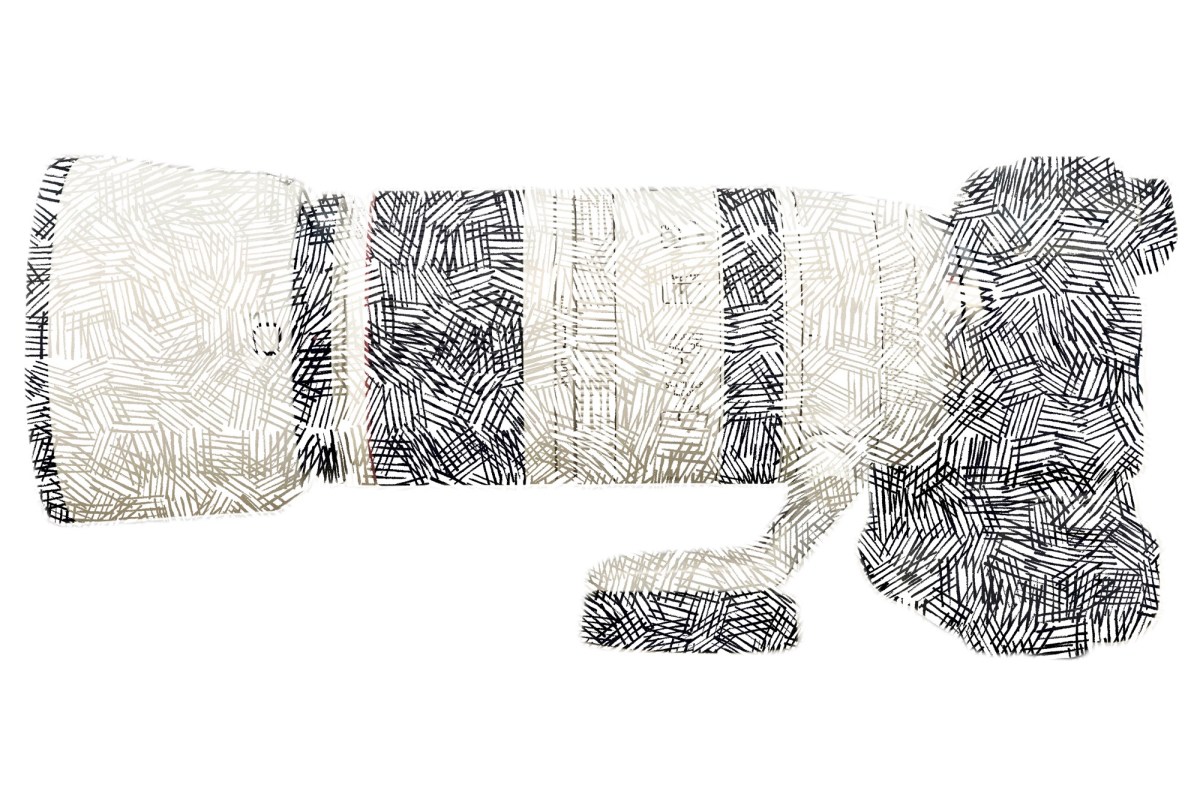
Canon RF 100-500mm ƒ/4.5-7.1 L IS USM

Compact super-telephoto zoom released in 2020 and purchased in the spring of 2024. Bought in combination with the Extender RF1.4x. With the extender mounted, the lens can only be set to between the 300 and 500mm positions, yielding a constrained 420 to 700mm.

When I purchased my first R-series camera (EOS R6 Mark II), the RF 100-500mm ƒ/4.5-7.1 was high on my list of future purchases. It was also more expensive than any other single piece of camera equipment that I owned.

However, I was not in a rush to get this lens as I already had the Tamron SP 150-600mm ƒ/5-6.3 Di VC USD G2 lens covering the super-telephoto range. While longer and slightly faster, the Tamron 150-600mm is also 46% heavier (26% with the Extender RF1.4x) than the RF 100-500mm. As my interest in bird photography increased, so to did my interest in the this lens. A healthy rebate of CA$350 made the purchase more palatable.

(The Canon RF 200-800mm ƒ/6.3-9 IS USM lens was announced, but generally unavailable, when I was ready to purchase the RF 100-500mm. The 200-800mm is a lot less expensive, but is also not in the same image-quality class as the 100-500mm. I stayed the course with the 100-500mm and do not regret that decision.)

Reviews and my initial testing showed that the RF 100-500mm is much sharper at wide open aperatures than the almost 50% cheaper Tamron 150-600mm, even with the RF1.4x in place.

In low light conditions I do have to use quite high ISO settings, but this is still manageable and I am able to shoot handheld 99% of the time. The low-light alternative would be the RF 600mm ƒ/4 L IS USM at 5x the price. I’ll keep the portability and versatility of the RF 100-500mm, thank you very much.

At the extended 700mm, this lens is usually fine for small bird photography, even at 24 megapixels. I do find myself cropping down about 30% much of the time, but still end up with detailed 16 megapixel images.

I would like to try this lens on a higher megapixel APS-C body (the EOS R7 at 32 megapixels is interesting, but not without a vertical grip). On 32 megapixel APS-C, without the RF1.4x, and with post-processing cropping to 24 megapixels, the lens would yield an effective focal length of 1100mm, if my math is correct.

I am able to carry this lens for much longer periods of time compared to the Tamron 150-600mm. It is also more compact in my bag.

With the RF1.4x still attached I can store the partially extended lens, with R6 Mark II mounted, in my ThinkTank MindShift BackLight 26L backpack (I do have to remove the BG-R10 vertical grip, but that is the case with any mounted lens in this backpack).

Without the extender, I can fit the RF 100-500mm (hood reversed) mounted on my R6 Mark II (with vertical grip) in my Timbuk2 large messenger bag with another compact zoom (RF 24-105mm or RF 70-200mm) and room to spare.

My main complaint about this lens is the same complaint I have with all Canon telephotos: the lack of built-in Arca-Swiss compatibility of the tripod foot. Why!? The Arca-Swiss foot on the Tamron 150-600mm is a thing of beauty. I pay twice as much for the Canon RF 100-500mm and have to attach a clunky third-party Arca-Swiss plate!

My other complaint is about the extenders (1.4x or 2x) only working from 300 to 500mm, though I understand and forgive the restriction if it was the only way to make such a compact lens with consistent image quality across the zoom range. In practice, with an extender installed, the storage issue is more of an annoyance than the lack of zoom range.

After the first few months of using the RF 100-500mm, 70% of the photos have been taken with the Extender RF1.4x attached. This may reflect the fact that I tend to do a lot of bird photography in the spring. At other times of the year, when taking more landscape or general photographs, I imagine the proportion of shots taken with the extender will be reduced.

Quite surprisingly, the RF 100-500mm makes a good close-up/macro lens!

Samples

Canon RF 100-500mm ƒ/4.5-7.1 L IS USM w/o Extender RF1.4x

w/ Extender RF1.4x

https://global.canon/en/c-museum/product/rf497.html

https://global.canon/en/c-museum/product/rf494.html (extender)

Previous: Canon RF 70-200mm ƒ/4 L IS USM

Photography Museum | Lenses | Canon RF Mount

Lens: Canon RF 70-200mm ƒ/4 L IS USM (Photography Museum)

< Back to the Photography Museum Lenses: Canon RF Mount

Canon RF 70-200mm ƒ/4 L IS USM

Released in 2021, I bought the Canon RF 70-200mm ƒ/4 L IS USM in March 2023. My first white Canon lens, though it hardly counts as a “Big White.”

My first L-series telephoto-zoom was the original Canon EF 80-200mm ƒ/2.8 L “Magic Drainpipe.” I love the image quality of that lens and never had an impetus to replace it with more modern EF 70-200mm variants.

I love the compactness of the RF 70-200mm ƒ/4. It is barely larger than the RF 24-105mm ƒ/4 IS USM, and together they make a nice combination.

I just recently added the Canon RF 100-500 ƒ/4.5-7.1 L IS USM, and, as other photographers have noted, I am a little worried that the RF 70-200mm ƒ/4 will see little use from now on. Time will tell. The RF 100-500mm is eminently hand-holdable, but in my mind the RF 70-200mm ƒ/4 remains a better walk-around landscape lens.

For one thing, the RF 70-200mm ƒ/4 has a ⅓ to ⅔ stop aperture advantage compared to the same focal lengths of the RF 100-500mm. This makes for slightly better low light performance and or more dramatic shallow focus. I think this advantage is apparent in the samples below.

I also feel that the RF 70-200mm ƒ/4 maintains some of the visual appeal (colour rendition, brokeh) of the old “Magic Drainpipe.” The RF 100-500m is a great lens and sharp across its focal range, but its bokeh is a bit messier and it’s rendition a bit flatter (both subjective traits, I know).

Samples

https://global.canon/en/c-museum/product/rf501.html

Previous: Canon RF 24-105mm ƒ/4 L IS USM

Next: Canon RF 100-500mm ƒ/4.5-7.1 L IS USM

Photography Museum | Lenses | Canon RF Mount

Lens: Canon RF 24mm ƒ/1.8 Macro IS STM (Photography Museum)

< Back to the Photography Museum Lenses: Canon RF Mount

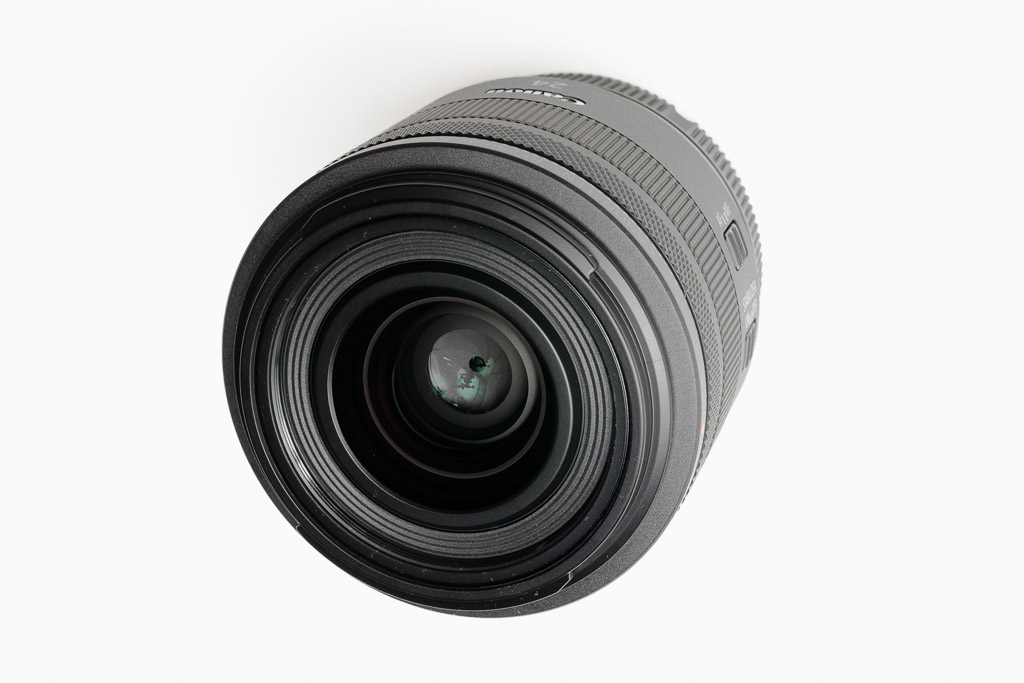
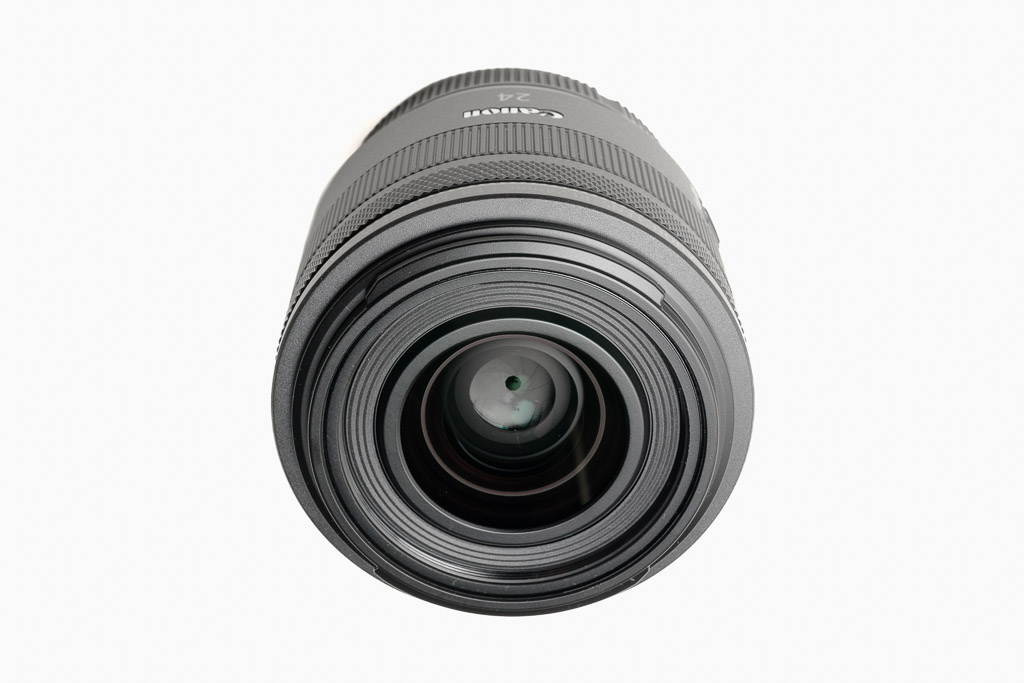
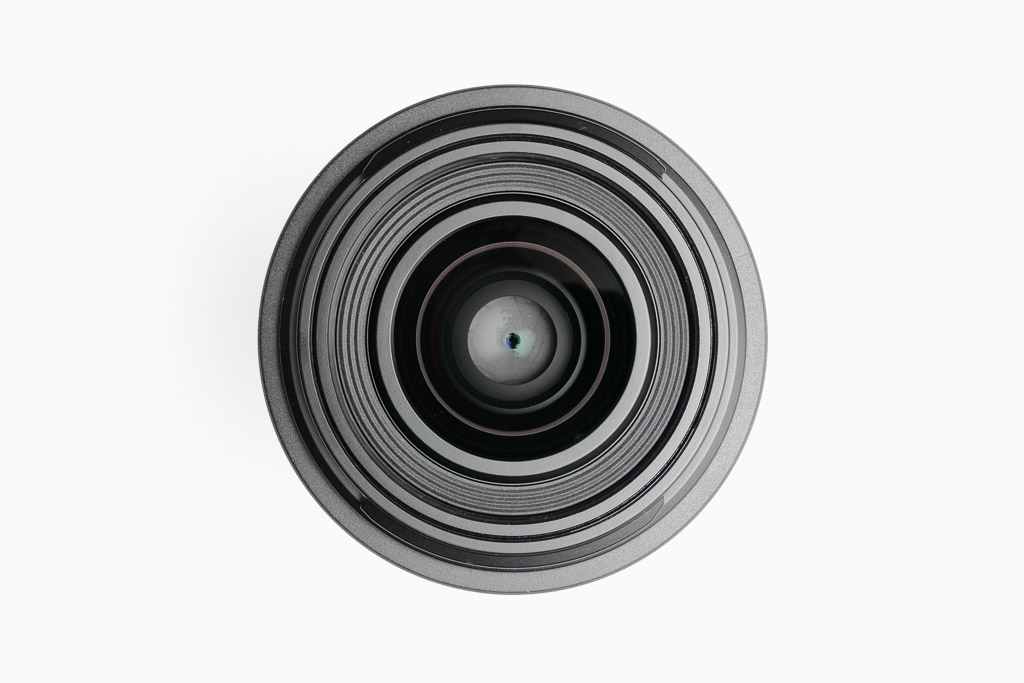
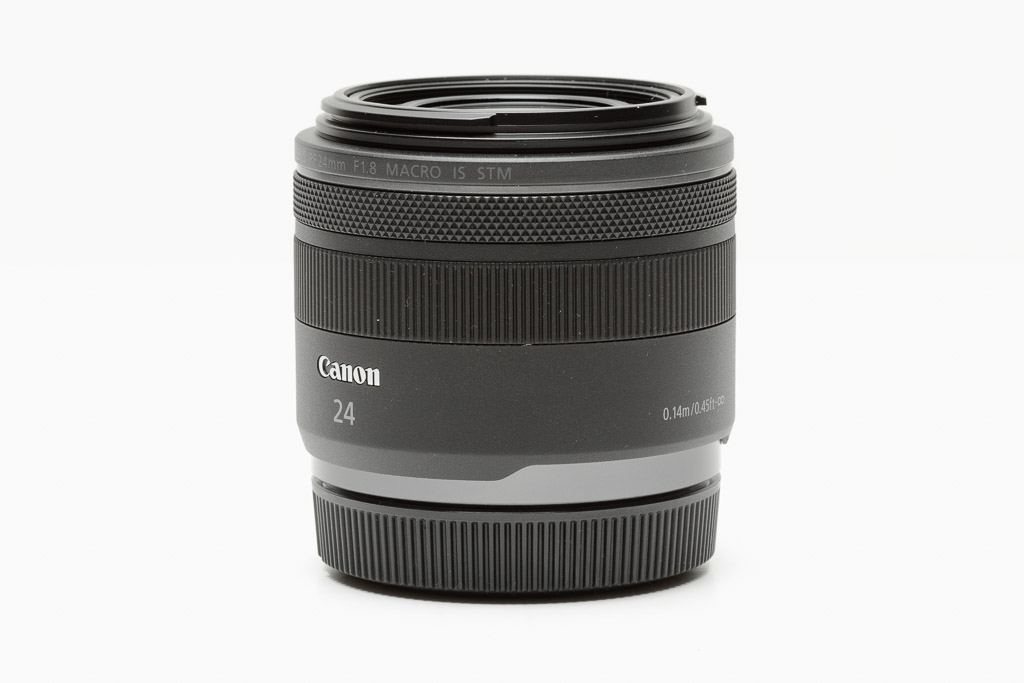
Canon RF 24mm ƒ/1.8 Macro IS STM

Introduced in August 2022, the Canon RF 24mm ƒ/1.8 Macro IS STM rounds out Canon’s non-L, moderately fast, STM, macro, prime line-up. It joins the 35mm and 85mm primes, sharing the same design language and common features of those focal lengths: dedicated IS and focus-mode switches, and separate focus and control rings.

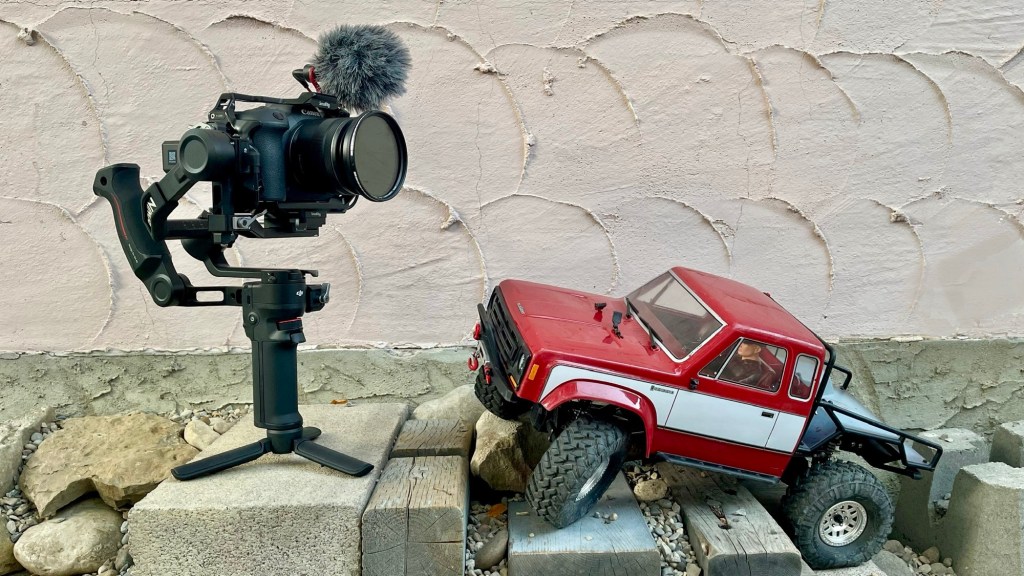
I bought this lens to use while making my RC truck videos which involve shooting at low angle and close-up much of the time. My first RF lens was the RF 24-105mm ƒ/4 L IS USM, which is a great all-around standard-zoom, but not very fast and rather large (the RF 24mm video setup is 480 grams lighter). I bought the RF 24mm in February 2023, a month after getting my EOS R6 Mark II.

The 24mm focal length works well for the majority of my RC truck shots—not action cam wide and not restrictedly telephoto. It is also just barely fast enough to shoot 30fps video at dusk (ISO 800, 1/60 of a second), something I often do. Wide open, the close-up depth of focus is razor thin, and, unfortunately, sometimes wrong (I am almost always using AF, except when I lock focus altogether). At brighter times of the day I use a variable ND filter to allow me to shoot at wider apertures with moderately-low depth of focus.

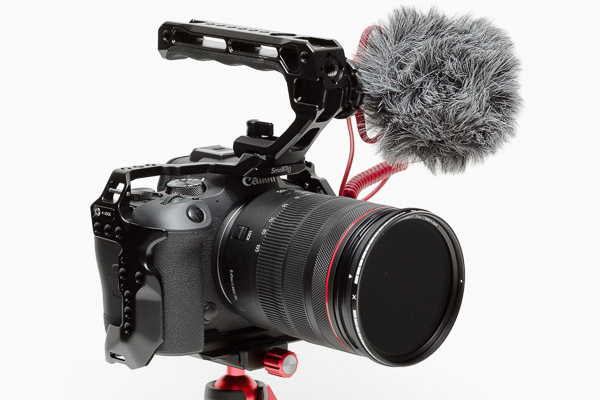
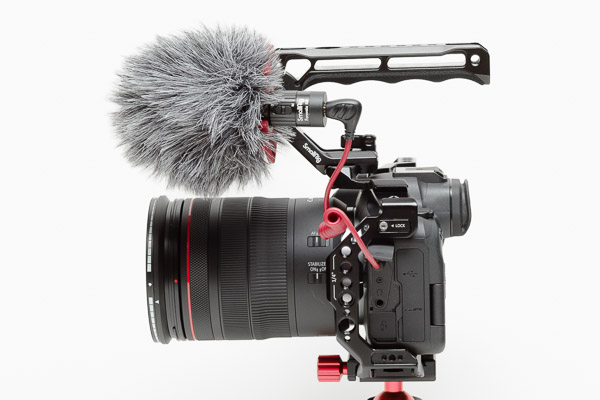
For six months I used this lens either on a tripod or handheld slung from the top-handle of my SmallRig video cage. Handheld worked, but I had to be careful. Admittedly, an APS-C or Super 35 sensor would be more forgiving in this regard.

In the fall of 2023, I bought a DJI RS 3 Mini gimbal, which greatly improved the versatility of the EOS R6 Mark II/RF 24mm combination. Handheld shots became a breeze and I could shoot more video faster with longer continuous shots.

Balancing the RS 3 Mini with the EOS R6 Mark II/RF 24mm combination is problematic. It became easier when I replace the DJI stock camera plate with the SmallRig Arca-Swiss Mount Plate (#4195) and stock vertical arm with SmallRig Extended Vertical Arm (#4196), both of which lowered the centre of gravity of the camera/lens/cage. I still have to be careful about which accessories I use and how I route my cables, especially concerning the fore-aft (Tilt H) balance. Even the camera LCD screen’s position/angle is important.

The EOS R6 Mark II was Canon’s first MILC to support Focus Breathing Correction, and the RF 24mm ƒ/1.8 Macro IS STM was the first lens compatible with this feature. Focus Breathing Correction really adds to the cinematic quality of the video captured by what is a relatively inexpensive rig.

In still photography terms, the 24mm focal length has always been a favourite of mine. Good for landscape and architecture, environmental macros, and relatively free of distortion when photographing people, especially groups. The ƒ/1.8 maximum aperture lets me reduce the depth of focus if I want to. I also, like 35mm, for a field-of-view closer to human vision, or 28mm as a compromise between the two.

I’m writing this, sitting on the covered-deck of our cottage in Poland. Last year I travelled with my EOS M5 with a full suite of EF-M lenses. This year, I wanted to carry the R6 Mark II and chose to haul just two lenses across the Atlantic: the RF 24mm ƒ/1.8 Macro IS STM and the RF 16mm ƒ/2.8 STM.

I spent all spring shooting super telephoto with my new RF 100-500mm, so I felt a summer spent photographing wide-angle wouldn’t be a hardship. So far, so good. And this year’s RF-series kit is even lighter than the M-series kit. Next year I might invest in a compact RF-S travel zoom to extend my reach somewhat. How the RF 24mm ƒ/1.8 might fit into that kit I am unsure.

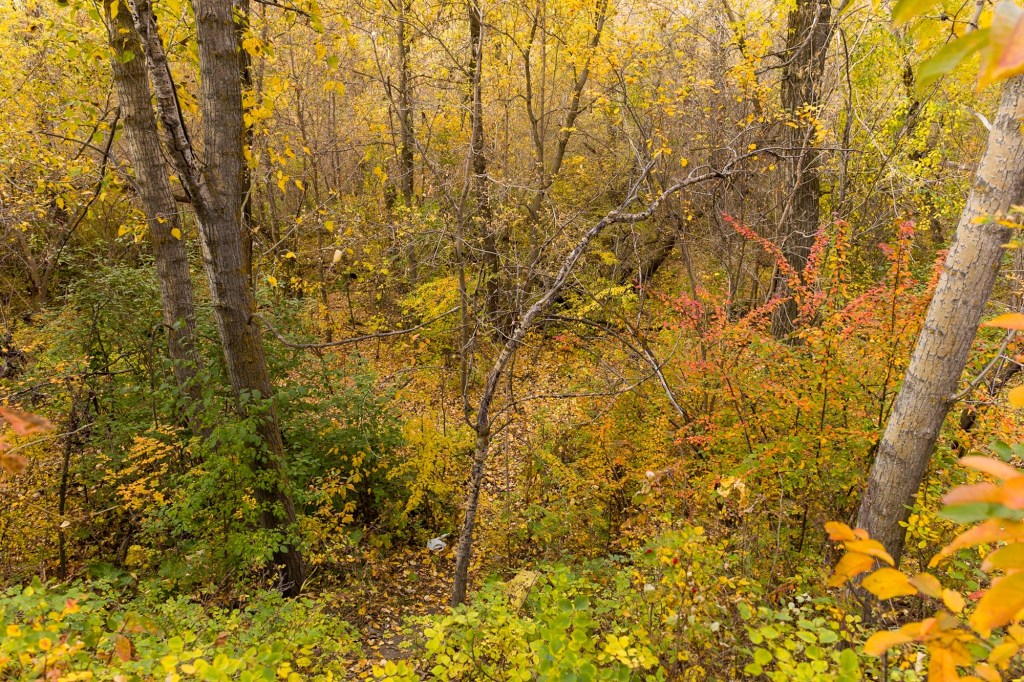
Samples

https://global.canon/en/c-museum/product/rf519.html

Previous: Canon RF 16mm ƒ/2.8 STM

Next: Canon RF 24-105mm ƒ/4 L IS USM

Photography Museum | Lenses | Canon RF Mount

Lens: Canon RF 16mm ƒ/2.8 STM (Photography Museum)

< Back to the Photography Museum Lenses: Canon RF Mount

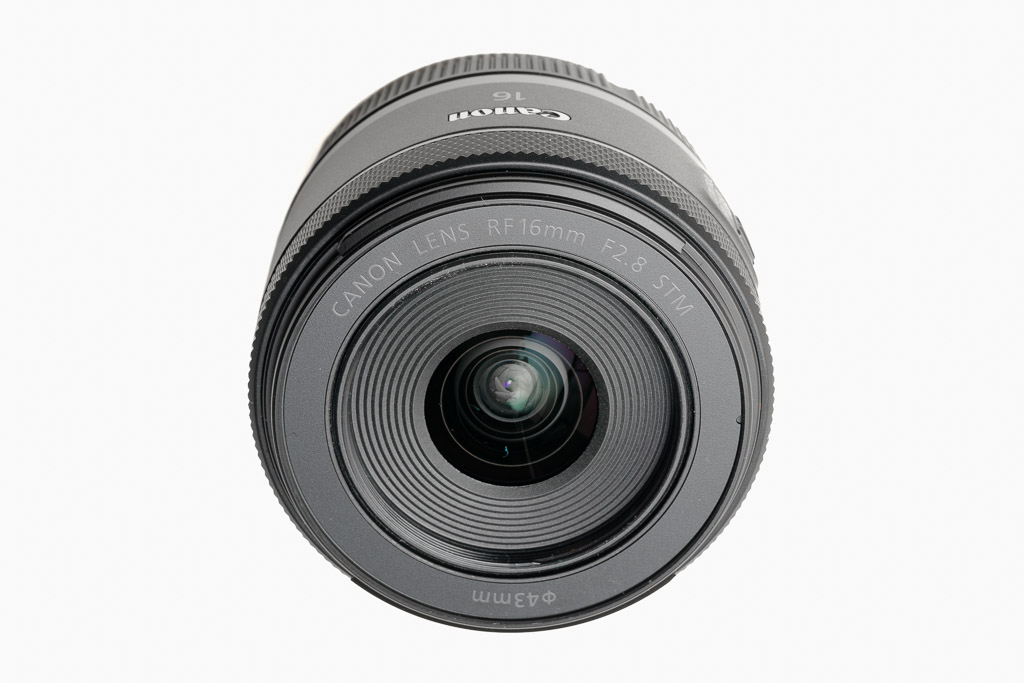
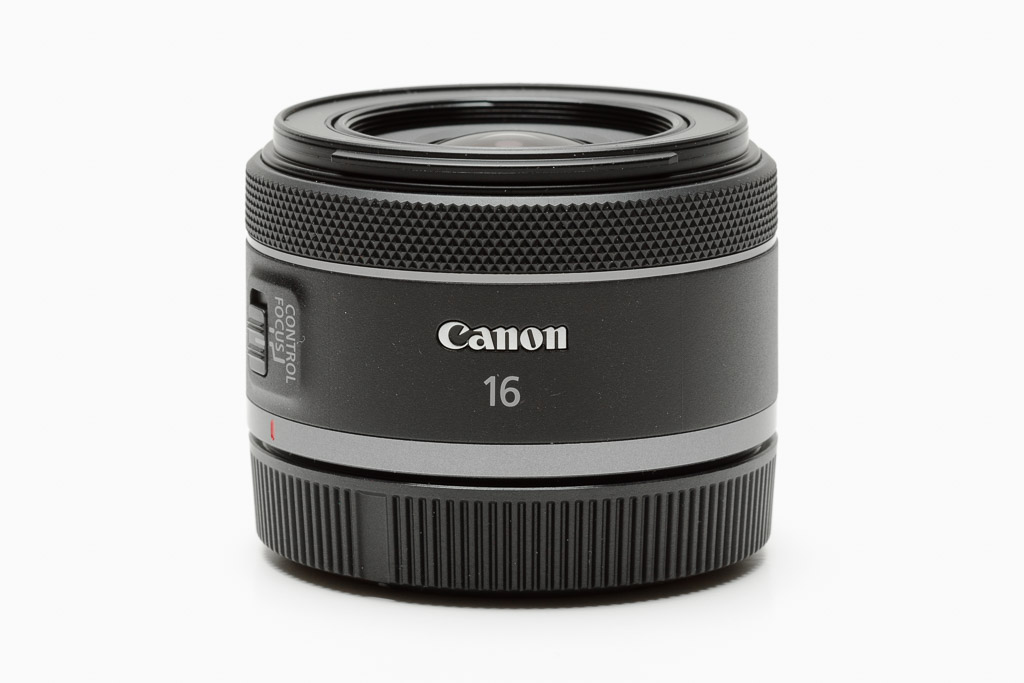
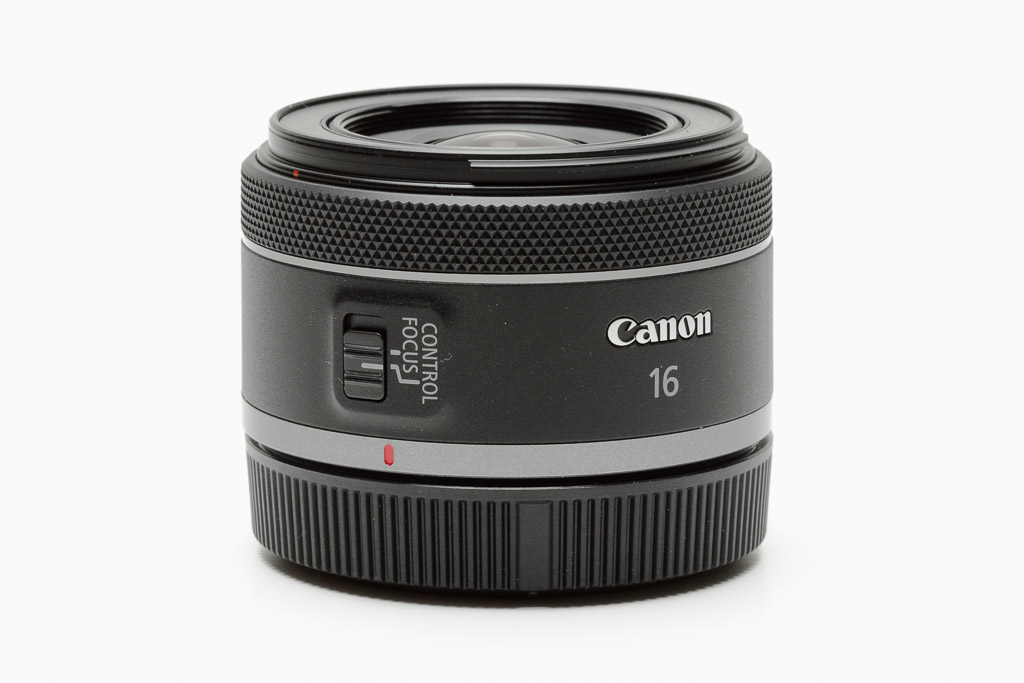
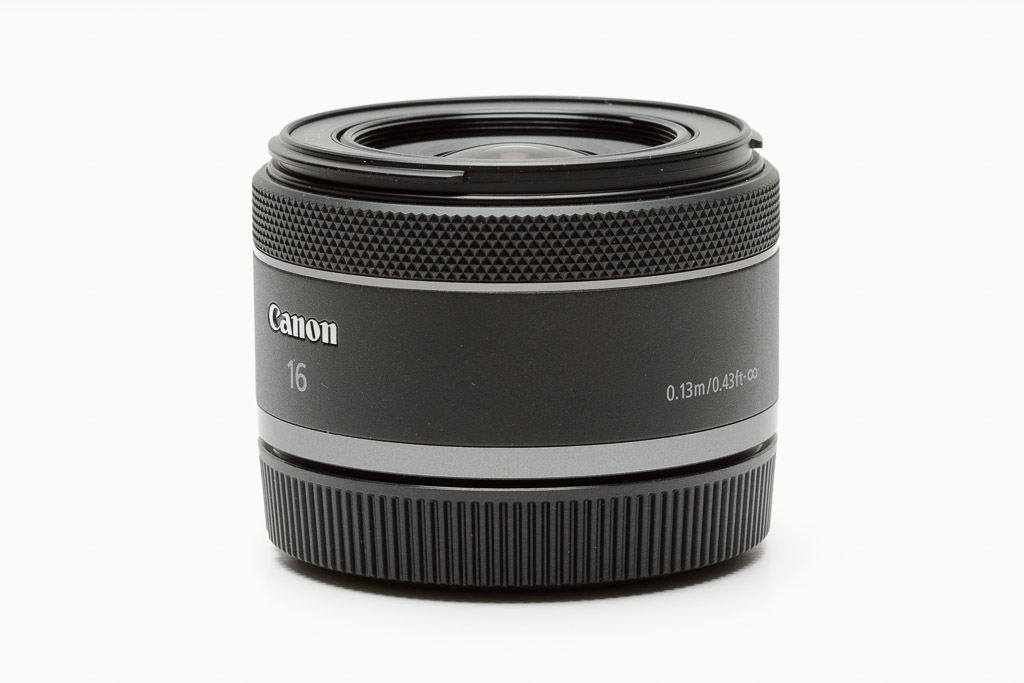
Canon RF 16mm ƒ/2.8 STM

An ultra-wide pancake-style lens for full-frame RF-mount cameras, introduced in 2020. My only non-IS (image stabilized) RF lens.

The RF 16mm follows the design language of the other non-L non-macro RF primes (like the RF 50mm ƒ/1.8 STM). It has a single focus/control ring near the front of the lens and a single switch to toggle the ring’s function between Focus and Control.

Switching to manual focus mode requires diving into the camera’s menus or assigning a camera button as an auto-focus/manual-focus toggle. I use back-button-focus, so I essentially have full-time manual focus with auto-focus at the touch of a button.

At 69.2 mm long and 40.2 mm wide and weighing approximately 165 g, the RF 16mm is one of the most compact first-party RF lenses (though technically, it is 0.3 mm longer and 5 g heavier than the RF 50mm ƒ/1.8).

The lens relies heavily on in-camera distortion- and vignette-correction. In theory this sounds less than ideal, but given the introductory $299 price tag, I think this a fair compromise. And in reality, the corrections do not negatively impact image quality that much.

I’ve used ultra-wide lenses since the introduction of the original EF 16-35mm ƒ/2.8 USM. However, it is one thing to shoot full-frame with 16mm simply being the widest focal length on a zoom lens, and it is another thing to be locked into 16mm with a prime lens. Zooming with your feet often means creating a completely different photograph.

To me, this focal length (in a prime) is a fairly specialized piece of kit. The images it creates are interesting, but it’s not something I could shoot with everyday. That said, I bought it for two reasons: 1) it was inexpensive; and 2) it is compact and I wouldn’t mind having it in my camera bag most of the time.

Often, even when primarily shooting with the 24-105mm, 70-200mm, or 100-500mm, I will have this lens in my bag on the off chance I want to shoot something ultra-wide. Of course, if I have a preconceived plan for wide-angle landscapes in mind I bring my EF 16-35mm ƒ/4 L IS USM instead.

The RF 16mm has a 43mm filter thread and lens cap. I usually have a 43-52mm step-up ring installed so I can swap a 52mm lens cap and filters easily between this lens and my RF 24mm ƒ/1.8 Macro IS STM.

I also usually have the Canon EW-65C lens hood installed to combat flare.

Samples

https://global.canon/en/c-museum/product/rf510.html

Next: Canon RF 24mm ƒ/1.8 Macro IS STM

Photography Museum | Lenses | Canon RF Mount

Lens: Venus Optics Laowa 4mm ƒ/2.8 EF-M (Photography Museum)

< Back to the Photography Museum Lenses: Canon EF-M Mount

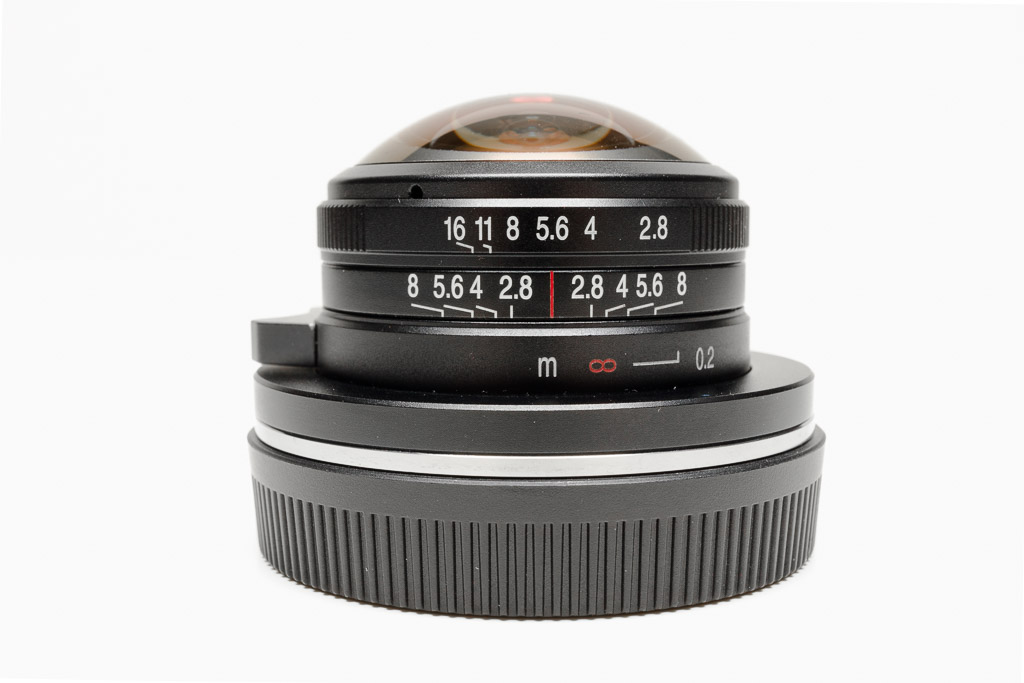
Venus Optics Laowa 4mm ƒ/2.8 Fisheye EF-M

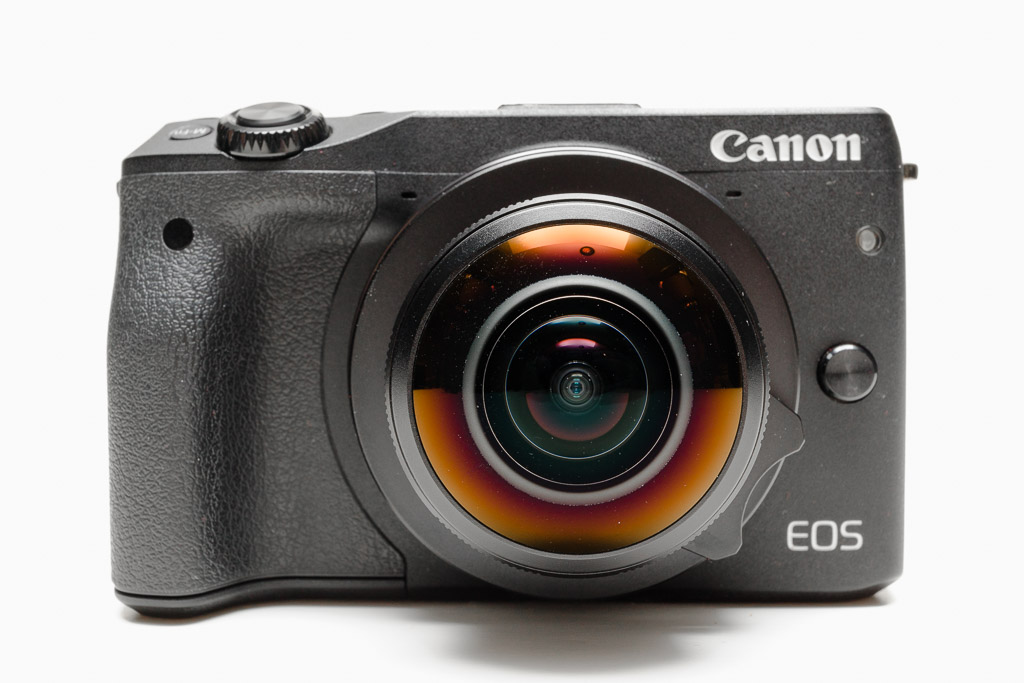
I bought the Venus Optics 4mm ƒ/2.8 Fisheye in April, 2020, shortly after the manufacturer announced that this compact lens was coming to the EF-M mount.

Amazingly this is only the second third-party lens I have ever purchased (not counting Lensbaby). The other is my Tamron 150-600mm super-telephoto. I’m a person of extremes I suppose.

I have always been intrigued by fisheye lenses. Even though I consider them a hyper-specialized lens category, I own more than my share of fisheyes: an Olloclip Fisheye for iPhone, the Lensbaby 12mm Fisheye Optic, and the Canon EF 8-15mm ƒ/4 L Fisheye USM.

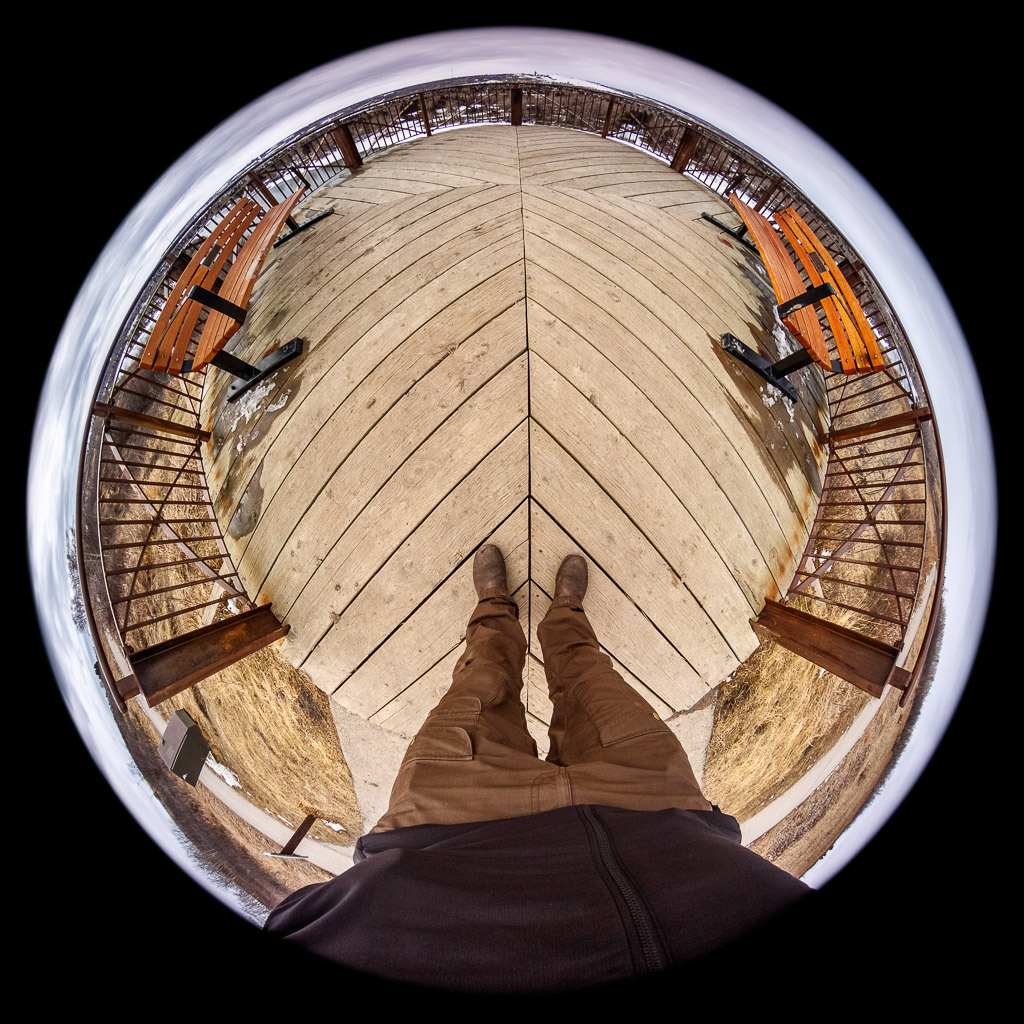
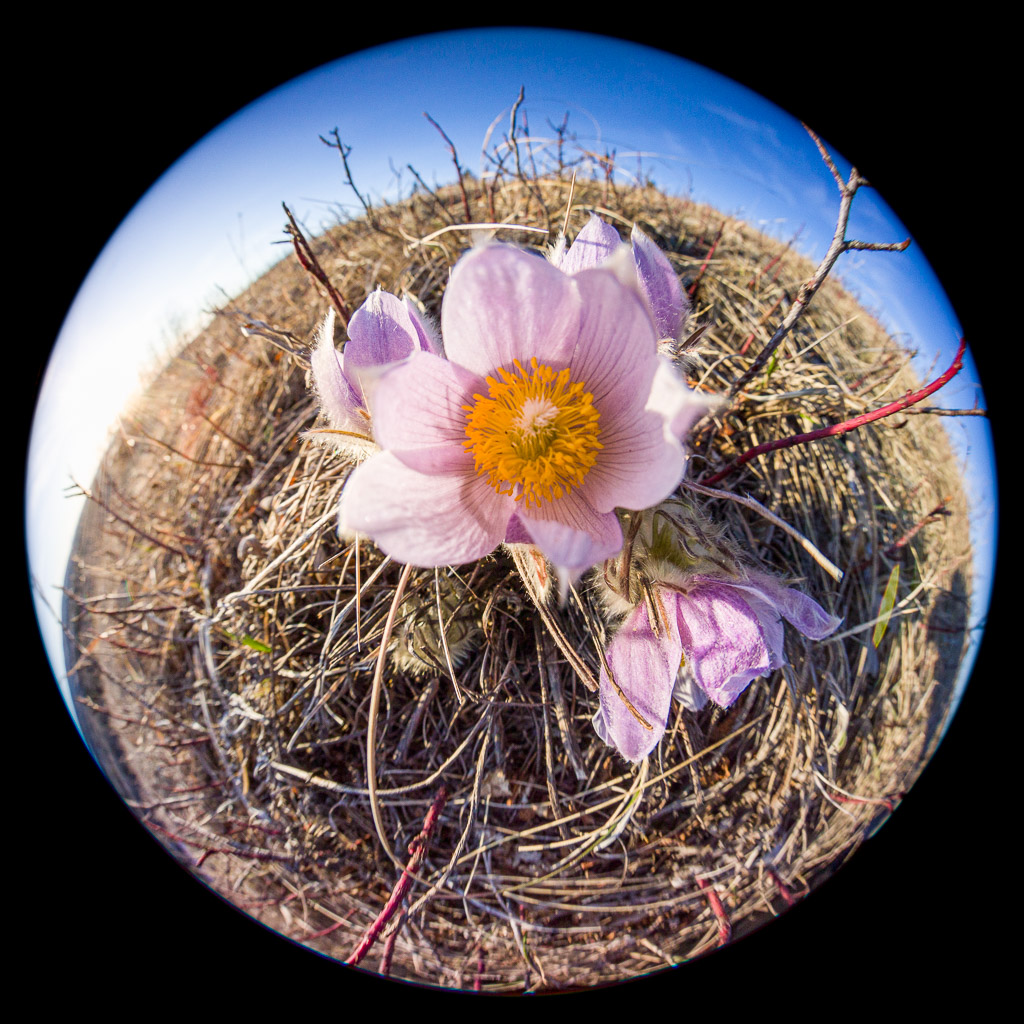
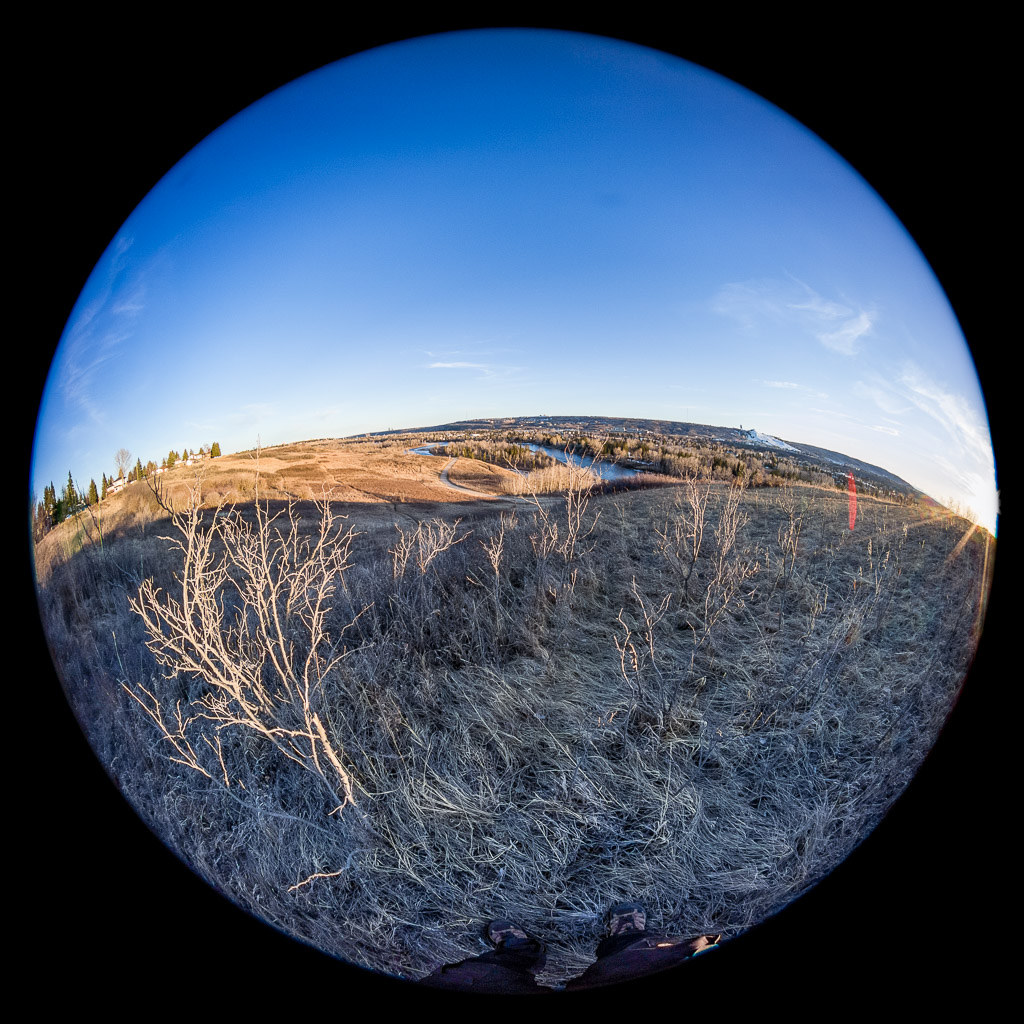
I wanted to add the Venus Optics Fisheye to my collection because it creates a full circular image on APS-C. It has a unique 210° field-of-view and was quite cheap at $199US (that’s less than 1 dollar per degree!)

The Venus Optics Fisheye is like a jewel. It is tiny, but it must have the highest weight to volume ratio of any lens I own.

It is a bit tricky to use, being manual focus and manual aperture. The aluminum lens cover is a friction fit but I have never had a problem with it slipping off.

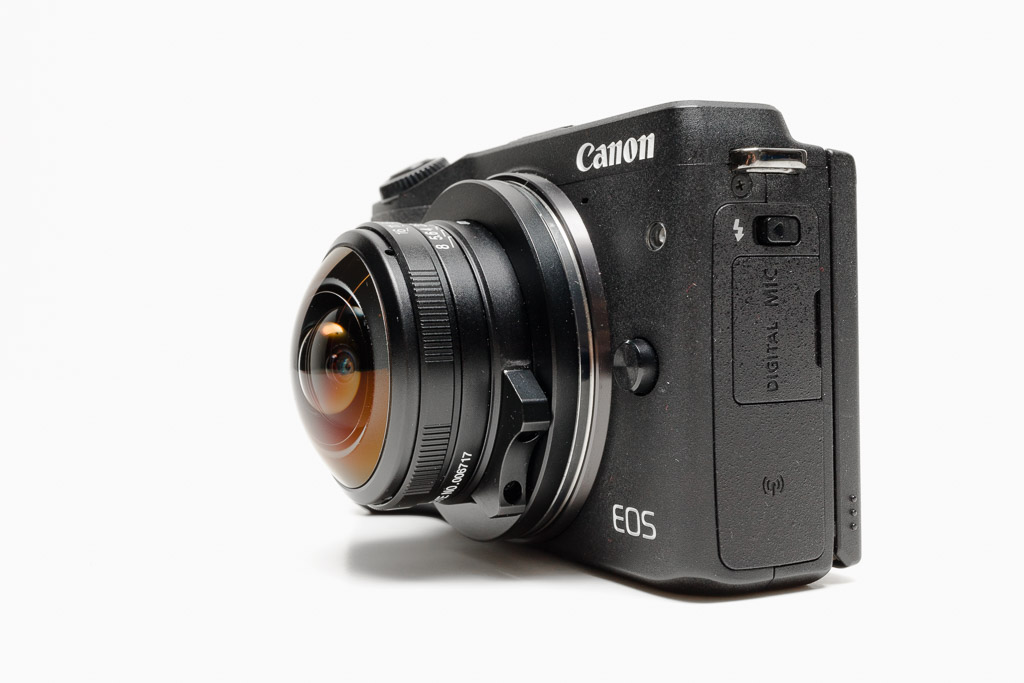
I use this lens on the Canon EOS M3 which has the same sensor size and quality as the EOS M5. It lacks Dual Pixel CMOS AF, but that doesn’t mean anything in manual focus mode.

The reason I don’t use it on the M5 is that the M3 grip is much smaller and it is easier to avoid getting my knuckles in the frame. Getting my toes in the shot is pretty much a guarantee.

The Venus Optics Fisheye is relatively sharp when stopped down to ƒ/5.6 or ƒ/8. Stopping down also improves the quality of the edges of the image circle. Still, there is often a lot of fringing at the edges, so I usually add a sharp circular vignette to blackout those edges (I have a Lightroom Preset for this).

A fun lens to experiment with.

Samples

Next: Canon EF-M 22mm ƒ/2 STM

Photography Museum | Lenses | Canon EF-M Mount

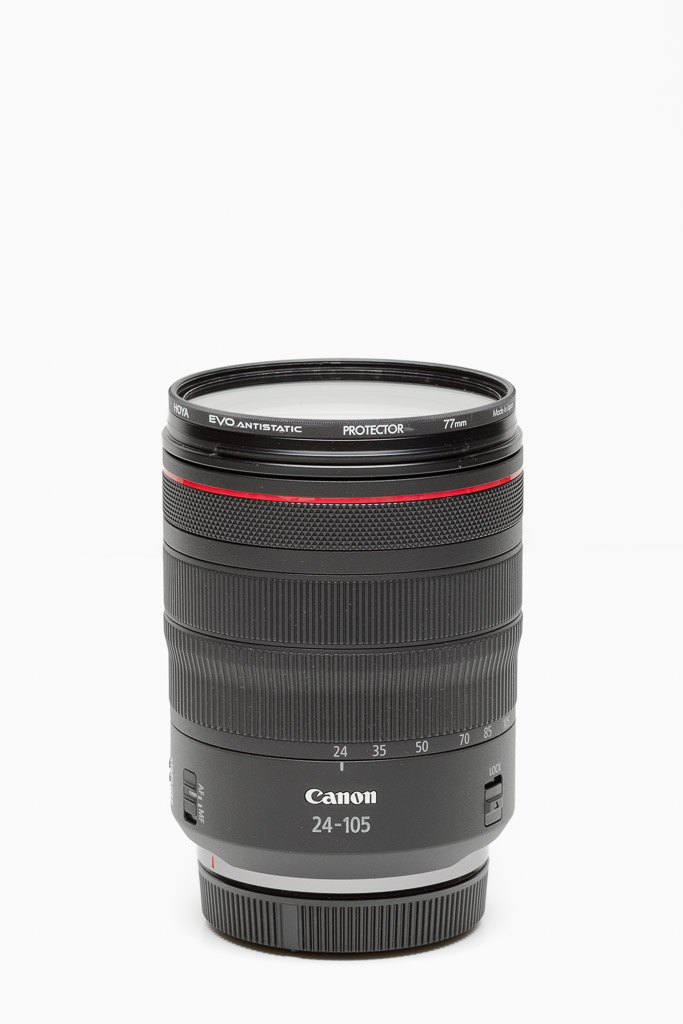
Lens: Canon RF 24-105mm ƒ/4 L IS USM (Photography Museum)

< Back to the Photography Museum Lenses: Canon RF Mount

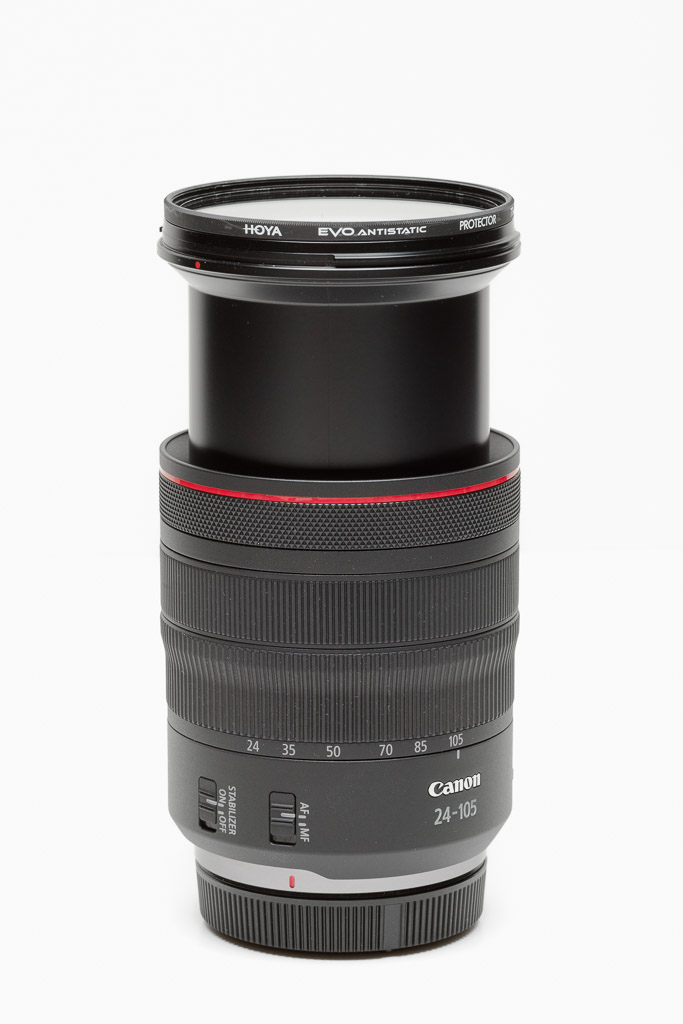
Canon RF 24-105mm ƒ/4 L IS USM

This is my first RF lens, purchased alongside the Canon EOS R6 Mark II camera in January, 2023.

This was the first of two RF zoom lenses introduced (2018), the first image stabilized RF lens, and the first L-series lens to feature Nano-USM. When introduced, it’s 5-stops of image stabilization was the most ever achieved by any Canon lens.

I chose this lens because I never owned a L-series standard zoom and I felt that it would be a versatile range on full-frame (standard zooms always felt too long on APS-C sensor cameras and so I gravitated more towards the 16-35mm wide-angle zoom range).

I planned to use the R6 Mark II for both stills and video and felt a compact, straight-aperture, image-stabilized lens would be a good place to start. I wasn’t wrong.

On 24 megapixels, the RF 24-105mm ƒ/4 L IS USM is quite sharp across the entire frame. No complaints so far. I have had zero issues with flare or chromatic aberration.

The ƒ/4 aperture is a little slow for video work in low light (dusk, indoors) but has been perfectly adequate for stills photography. In fact I have only ever seen the slightest amount of motion blur even in photos taken at shutter speeds of ¼ second or longer. Really, with lens IS, IBIS (in-body image stabilization), a 24 megapixel sensor, and high ISO capabilities all combined, I just don’t know when I would need to shoot stills on a tripod, except to compose with filters.

RF L-series lenses look nice and feel very good in the hand. The zoom and focus rings are more refined than the older EF designs, but are still easy to locate and turn. I do find that the control ring is quite hard to feel, especially with gloves on.

The RF 24-105mm has been a good complement to my EF 16-35mm ƒ/4 L IS USM, and I expect will serve me many years as a professional “kit” lens.

Samples

https://global.canon/en/c-museum/product/rf471.html

Previous: Canon RF 24mm ƒ/1.8 Macro IS STM

Next: Canon RF 70-200mm ƒ/4 L IS USM

Photography Museum | Lenses | Canon RF Mount

Photography Museum Lenses: Canon RF Mount

< Back To Photography Museum Lenses

Canon’s RF lens mount (2018) used on EOS R cameras and associated RF lenses is an interesting evolution and amalgamation of the previous EF (1987) and EF-M (2012) technologies. The mirrorless specific RF mount has the same 54mm diameter as the EF mount, but has a flange to sensor distance of only 20mm versus 44mm for the SLR EF mount (and 18mm for the EF-M mount). This shorter flange distance allows for more compact wide angle lens designs. It also means that EF mount lenses can be used on EOS R cameras with an adaptor.

The RF mount features 12 twelve electronic contacts compared to the 8 contacts on EF/EF-S and 9 contacts on EF-M. The increased contact count allows for more bandwidth and faster communication between the lens and the camera body.

Like EF-M lenses, Canon RF lenses contain factory-calibrated correction data which is passed to the camera when mounted.

The RF mount was initially only available on full-frame R-series cameras. However, in late 2022, Canon introduced the R1O and R7 bodies with an APS-C sensor. Concurrent with these new bodies, Canon released the first RF-S lenses designed to work with the smaller sensor. RF-S lenses can also be mounted on full-frame R-series bodies, but with an automatic 1.6x sensor crop.

Along-side the zoom and focus rings, many RF mount lenses feature an additional control ring. In some lower end primes and zooms, a switch toggles a single ring between focus and control functions. A control ring is also available on the Control Ring Mount Adapter EF-EOS R. The control ring can be configured in camera to adjust many camera functions, such as aperture, ISO, focus area, exposure compensation, flash exposure compensation, etc.

While Canon never released a professional L series lens for the EF-M mount, the RF mount and R-series bodies were, from the onset, targeted more towards professionals and enthusiasts than amateurs and beginners. In the first two years, Canon released 8 L series lenses and only 2 non-L lenses (a 35mm prime and 10x super-zoom).

As of writing, all RF lenses feature the slower, but virtually silent, STM (stepper-motor) or the faster, and still mostly silent, linear Nano-USM (ultra-sonic motor)1. Because of these two technologies, all RF lenses to date are focus-by-wire and work equally well for either stills or video.

Canon has chosen to prioritize compactness for RF L-series zoom lenses which mostly feature extending lens barrels2, compared to most EF L-series lenses which were of a bulkier internal-zoom design.

To date, all L-series zoom lenses also feature IS (image stabilization), except for the fast and already very large RF 28-70mm F2 L USM.

In early 2024, Canon released the Z-series of hybrid video/stills RF lenses which feature internal zoom, power zoom compatibility, and a step-less/click-less aperture ring for video iris control. The first lens in this series was the Canon RF 24-105mm F2.8 L IS USM Z. For serious video work it would be nice to have a better balanced internal zoom lens, but really the Z-series lenses feel like video lenses that also work for stills photography and not the other way around.

In mid-2024, Canon announce the upcoming RF 35mm ƒ/1.4 L VCM, which is part of a hybrid video/stills series of prime lenses featuring voice-coil-motor (a linear actuator) focusing and a step-less/click-less aperture/iris ring.

Adapted EF lenses (Canon or third-party) work seamlessly via the EF-EOS R adaptors.

Canon have mostly chosen to keep the RF mount closed to third-party autofocus lenses, though in 2024, Sigma became the first third-party to announce the development of lenses for the RF mount, seemingly with Canon’s blessing. Their roadmap lists mostly wide angle or APS-C lenses in their Contemporary-line.

The new Lens Dust Cap RF is compatible with EF lenses, but not the other way around.

In fact, my biggest complaint about the RF mount is the dust cap design. Because the bayonet tabs on the EF mount were arranged symmetrically, the older EF dust caps could be mounted at any of three angles (0°, 120°, 240°). Without looking you could quickly get the dust cap on just by feel. The bayonet tabs on the RF mount are not symmetrical. The new dust cap will attach in only one orientation and the alignment marker is quite hard to see. I plan to highlight all of my RF dust cap alignment markers with silver marker or vinyl strips so they are easier to see and still look classy.


  1. The only exception is the RF 5.2mm F2.8 L Dual Fisheye Lens which has fixed focus. ↩︎
  2. See Z-series ↩︎

Camera: Canon EOS R6 Mark II (Photography Museum)

< Back to the Photography Museum Cameras

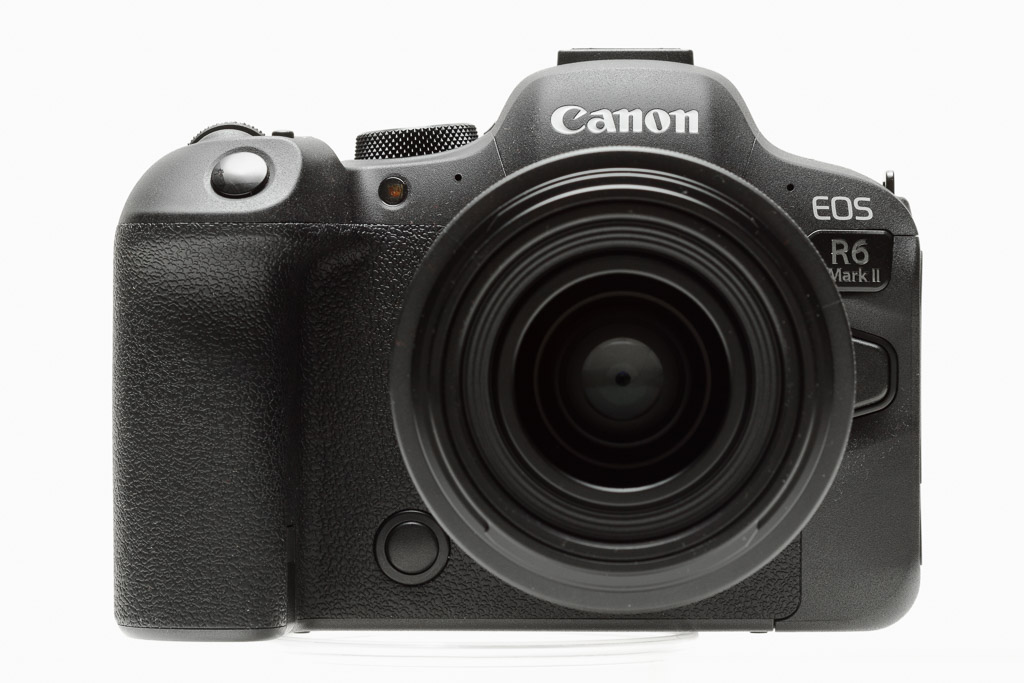
Canon EOS R6 Mark II

I’ve always wanted, but could never justify, a full-frame (ILC) interchangeable-lens camera. For many years, I also prioritized compactness and portability over camera speed and marginal image quality gains.

When Canon introduced the EOS R-series in 2018, I looked on with interest. I waited patiently for the R-series to mature to the point were an enthusiast grade body would have the right balance of features and price for me.

The EOS R6 Mark II is that camera. I think it is the perfect Swiss Army knife of a body and a class leader at this price point.

Features that interested me:

  • IBIS (in-body image stabilization)
  • 6k oversampled full-sensor 4k 60fps 10-bit 4:2:2 C-Log 3 internal video
  • 24 megapixel full-frame sensor (I actual don’t want more megapixels which would negatively impact speed and video performance)
  • DIGIC X Processor (same as EOS R31)
  • 12 fps mechanical shutter, 40 fps electronic shutter
  • Subject detection (people, eyes, animals, vehicles) and tracking borrowed from the flagship EOS R31

In 2020 I started shooting video seriously for the first time (though the subject, RC cars, is not that serious). Thus I was keen to have a full-frame MILC hybrid camera that would last me for years to come.

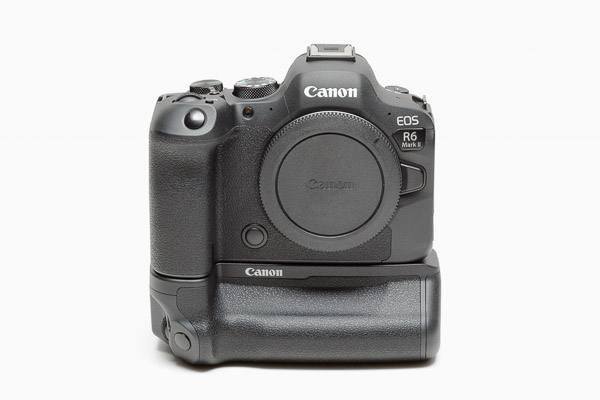
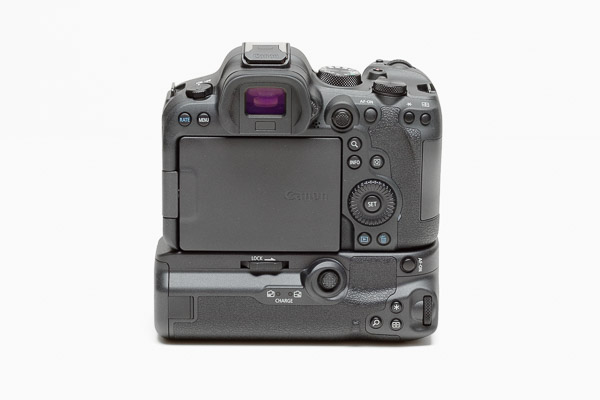
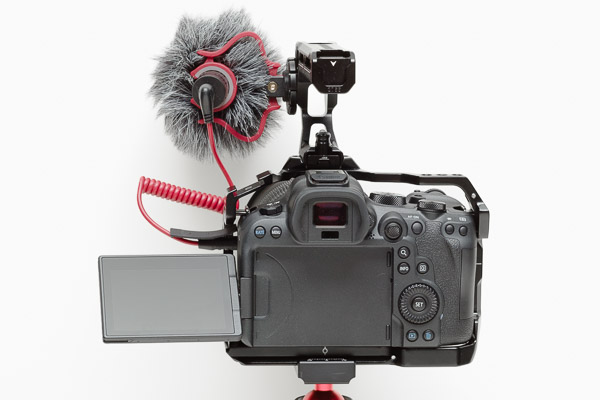
I purchased the EOS R6 Mark II with a RF 24-105mm ƒ/4 L IS USM lens and BG-R10 Battery Grip. I also kitted it out with a SmallRig cage, top handle, external microphone, tabletop/low-angle tripod, and other accessories for shooting video.

I have been shooting with the camera as much as possible, but of course it is still mid-winter, so I haven’t done as much video work as I would like. I plan to purchase a few faster prime lenses to make handheld video easier (the RF 24-105mm is a bit chunky) and may invest in a gimbal and external monitor/recorder eventually.

Some of my favourite minor refinements that just make shooting with the the EOS R6 Mark II almost a joy:

  • The ability to assign different AF (auto-focus) configurations to different buttons. I have the AF-ON button configured as my main back AF button. I have the * button configured to switch to Single AF Point focus area, enable Auto Subject Detection if it is not already on, and to start Whole Area Servo AF Tracking. I have other buttons configured to start/stop Whole Area Tracking and to cycle through the available focus areas.
  • Though the camera does not have built-in GPS, it is continuously connected to my iPhone via Bluetooth LE and receives location information in real-time from the Camera Connect app, in the background. The camera does lose the phone connection if I use the stand-alone Bluetooth remote, but that is okay. If I really need GPS data and a remote I can just use the Camera Connect app remote function. Alternatively, the camera still works with the ageing GP-E2 hot-shoe-mounted GPS receiver, or I can use a GPS track from my watch to tag photos in post-production. (The camera can also be continuously connected to Wifi, which would be great in a studio situation).
  • There are two auto–white-balance modes: AWB and AWB-W (white priority). I always find that AWB (Canon’s and Apple’s) under-compensates when shooting under warm lighting conditions, probably because people prefer a warmer image. I don’t mind a slightly warm image, but have never used AWB because I find it too warm. Now, with AWB-W, the camera is much more aggressive about removing warm casts, resulting in a much more accurate colour rendition.
  • When switching to Custom WB in the Quick Settings screen, I can press the trash button and then take a quick WB reading with the shutter button (no file is created of the WB scene). This is so much faster than the old EOS M-series method of taking an actual photo (which would be saved on the card), navigating to the Custom WB menu item, and then loading the saved photo to get a WB reading. Since I have been shooting around snow lately, I have been finding myself taking regular readings as lighting conditions change, despite the fact that I shoot RAW and can always adjust the WB in post. I generally use the ETTR (expose-to-the-right) exposure methodology and an RGB histogram, so having accurate WB in-camera actually helps me to better determine exposure.

At this point, any enthusiast grade or better camera is capable of taking amazing photos, but it’s these little things that making shooting easier, more flexible, and thus pleasant.

Another neat feature is the OVF (optical viewfinder) simulation mode. This turns off Exposure Simulation and the Histogram, but really does make the viewfinder more DSLR-like. I haven’t used it much, but would likely use it in walk-around street photography situations for a change of pace. I’d have to get used to setting exposure with the over/under indicator, something that is very foreign to me at this point.

So far I am happy with this camera, though I struggled to get inspired with it at first. I do miss the compactness of my EOS M5. When/if we ever travel again it will be a challenge to decide which camera to bring along.

Some year, when I have a little extra money, I might buy a small APS-C censored EOS R-series body to replace my M5 (which is still perfectly adequate for everything except video). On the other hand, I might save up some money and invest in a EOS R5 Mark II (I assume the R3’s BSI — back-side illuminated — stacked sensor technology will soon trickle down to other full-frame bodies).


  1. In fact the R6 Mark II is more similar to the R3 than to the R5. The main things the R6 Mark II lacks are Eye Control, the BSI stacked sensor, the faster internal recording of the CF Express Type B card slot, ethernet, and built-in GPS. The R3 with built-in grip and larger battery is actually 28 grams lighter than the R6 Mark II with grip attached and two LP-E6NH batteries! This is amazing considering that the R3 also is a robust alloy body.

https://global.canon/en/c-museum/product/dslr905.html

Photography Museum   |   Cameras

Lens: Canon EF-M 28mm ƒ/3.5 Macro IS STM (Photography Museum)

< Back to the Photography Museum Lenses: Canon EF-M Mount

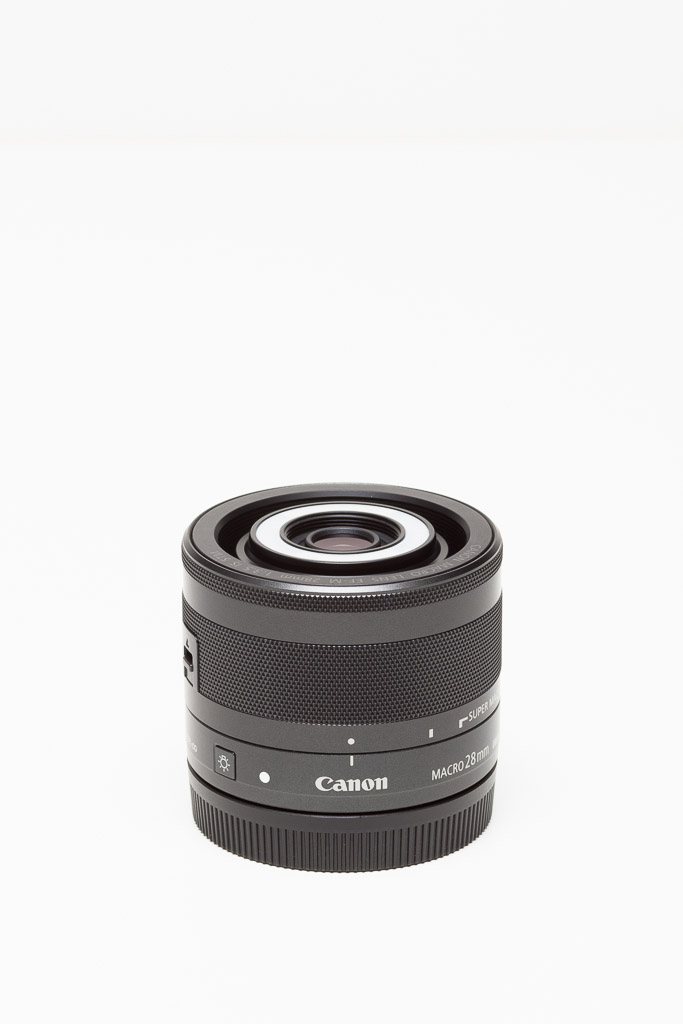
Canon EF-M 28mm ƒ/3.5 Macro IS STM

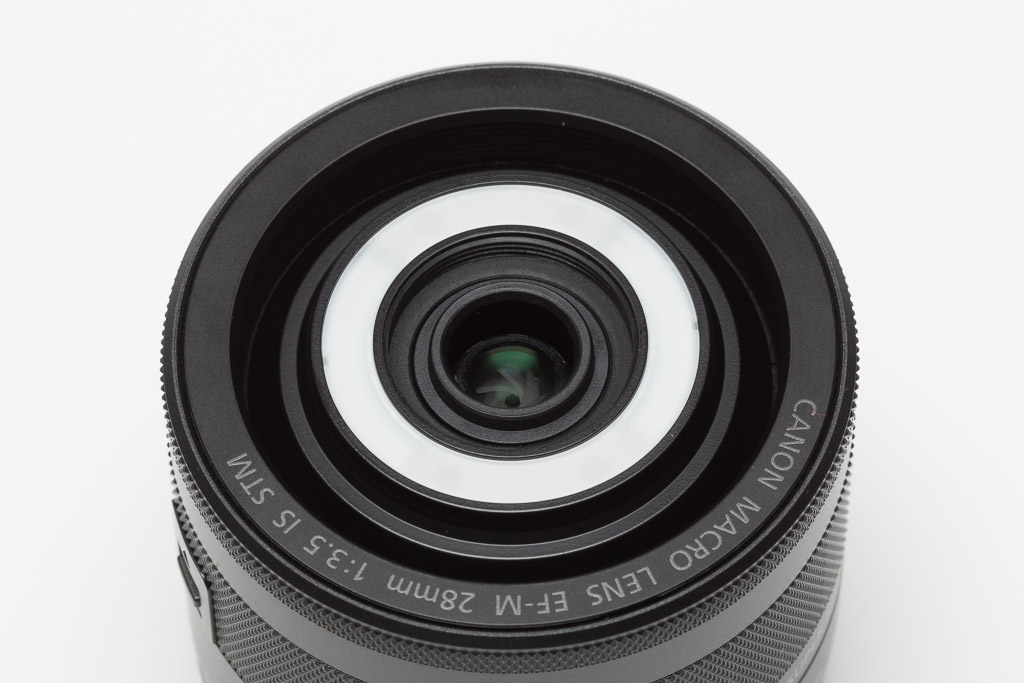
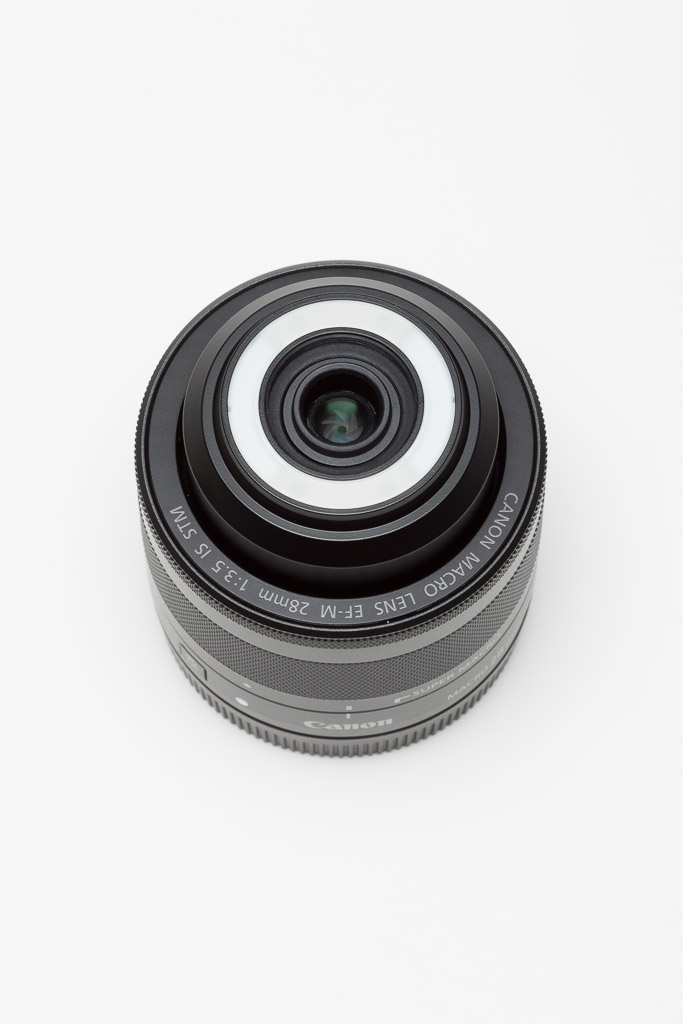
The Canon EF-M 28mm ƒ/3.5 Macro IS STM lens is a compact macro lens with several interesting features. The collapsible design has two selectable focus ranges: infinity to 0.7x, and Super Macro which goes from 0.7x to 1.2x. To counteract the issue of lighting with such a short working distance, the lens has a built-in camera-powered selectable ring light. A screw on “lens hood” covers the ring light in storage. With the hood removed, the front element has chamfered outer edges to allow as much light as possible to reach a close subject.

For a dedicated macro lens, I generally prefer a short telephoto focal length as this gives more working distance. On the other hand I do like the look of wide-angle extreme close-ups.

As is usual with macros, this lens is quite sharp shooting at the minimum focusing distance all the way thru to infinity. That makes it a decent general purpose walk-around prime, though it has a relatively small maximum aperture. For general use I prefer the compact EF-M 22mm ƒ/2 STM or the very fast EF-M 32mm ƒ/1.4 STM, though neither of these are image stabilized.

This lens was released in June, 2016, but I didn’t buy my copy until January, 2020.

I haven’t used this lens as much as I would like, but I have been pleased with the images I have captured with it.

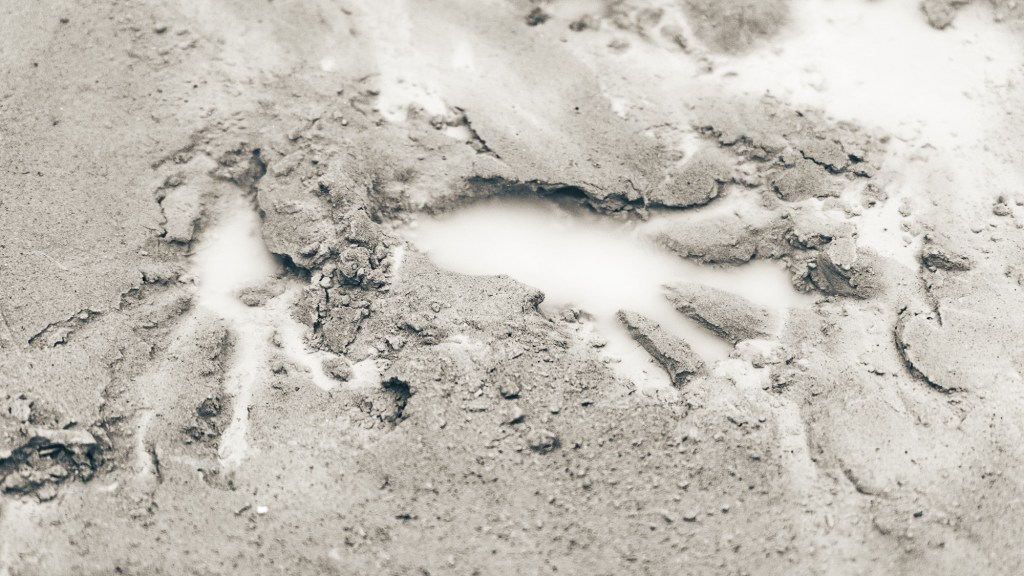
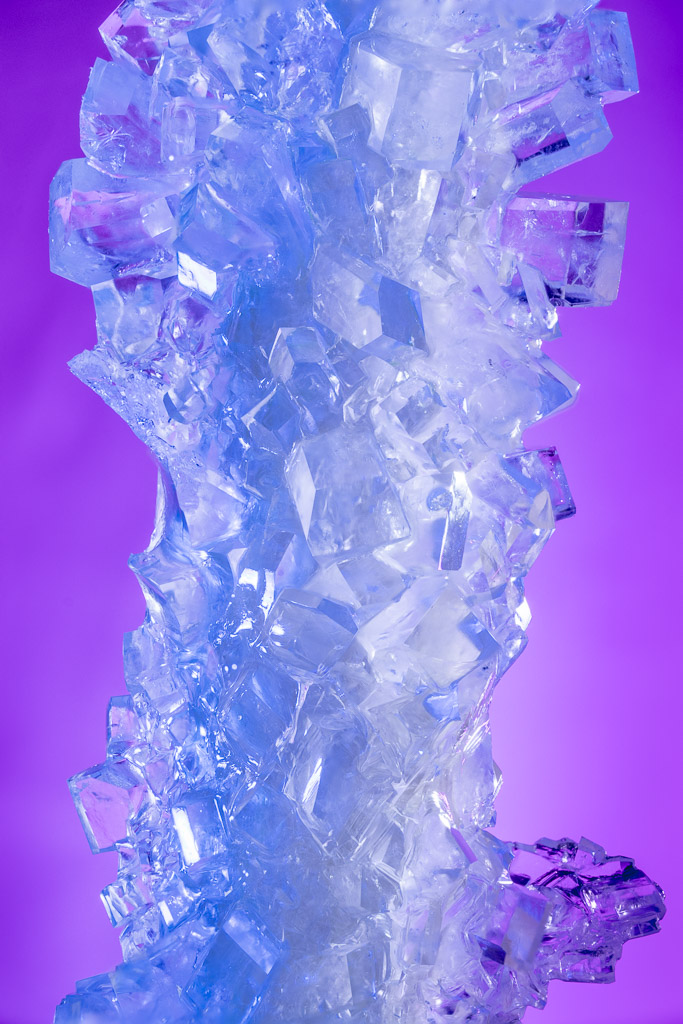
The first image below, Sugar Crystals, is a focus stack of 12 shots. The second image is one of ten frames from a focus stack set—the third image, Salt Crystals, which shows how depth of focus can be increased by stacking multiple focus-bracketed exposures.

Samples

https://global.canon/en/c-museum/product/ef456.html

Previous: Canon EF-M 22mm ƒ/2 STM

Next: Canon EF-M 32mm ƒ/1.4 STM

Photography Museum | Lenses | Canon EF-M Mount